Solar-Ready Commercial Roofing in Vancouver, WA
Prepare a Vancouver commercial roof for solar with an assembly and drainage review, repair planning and coordination for future penetrations and equipment. A planned solar array adds equipment, supports and maintenance routes to the roof. Before installation, the owner needs to know whether the existing membrane and structure can support the proposed work without concealing leaks or shortening a repair window. We inspect commercial roofs before the solar layout is finalized. Clark College and Central Park sit within an institutional district with public facilities and education uses. Columbia Business Center includes manufacturing, distribution and warehousing. Rooftop access and ongoing operations differ across those settings. A commercial roof inspection can establish visible conditions before solar equipment is laid out. Review the Roof Before the ArrayWe identify the membrane system, installation history where available, roof sections, drains, edges, flashing and existing equipment. We document open seams, prior patches, soft areas, ponding evidence and visible deterioration. If moisture is suspected below the surface, a moisture survey or test opening may help define the affected area. Solar installation should not cover a condition that requires repair or testing first. The age of a roof alone does not establish whether it is ready for an array. Attachment, substrate, moisture, membrane condition, roof access and the proposed layout all matter. We can mark areas that need correction and provide findings for coordination with the solar contractor and structural engineer. Structural capacity, wind loads, attachment design, electrical work and system production are reviewed by the appropriate design professionals. Columbia Business Center's industrial and distribution uses include facilities where equipment, service access and logistics may already occupy roof areas. At Clark College, multiple institutional buildings and public facilities require building-specific coordination. Neither site's uses determine its roof condition. We confirm the actual address, drawings, solar proposal and facility contact before scheduling. Solar-ready planning involves both future attachment needs and current roof work; confirm applicable Vancouver review when the scope changes insulation or assembly. Solar projects may involve permits and code questions that depend on the project documents and current requirements. We review roofing interfaces with the project team and refer design, structural and electrical decisions to the professionals responsible for those disciplines. |  Prepare a Commercial Roof for Solar Request a roof assessment or call 555-555-5555. 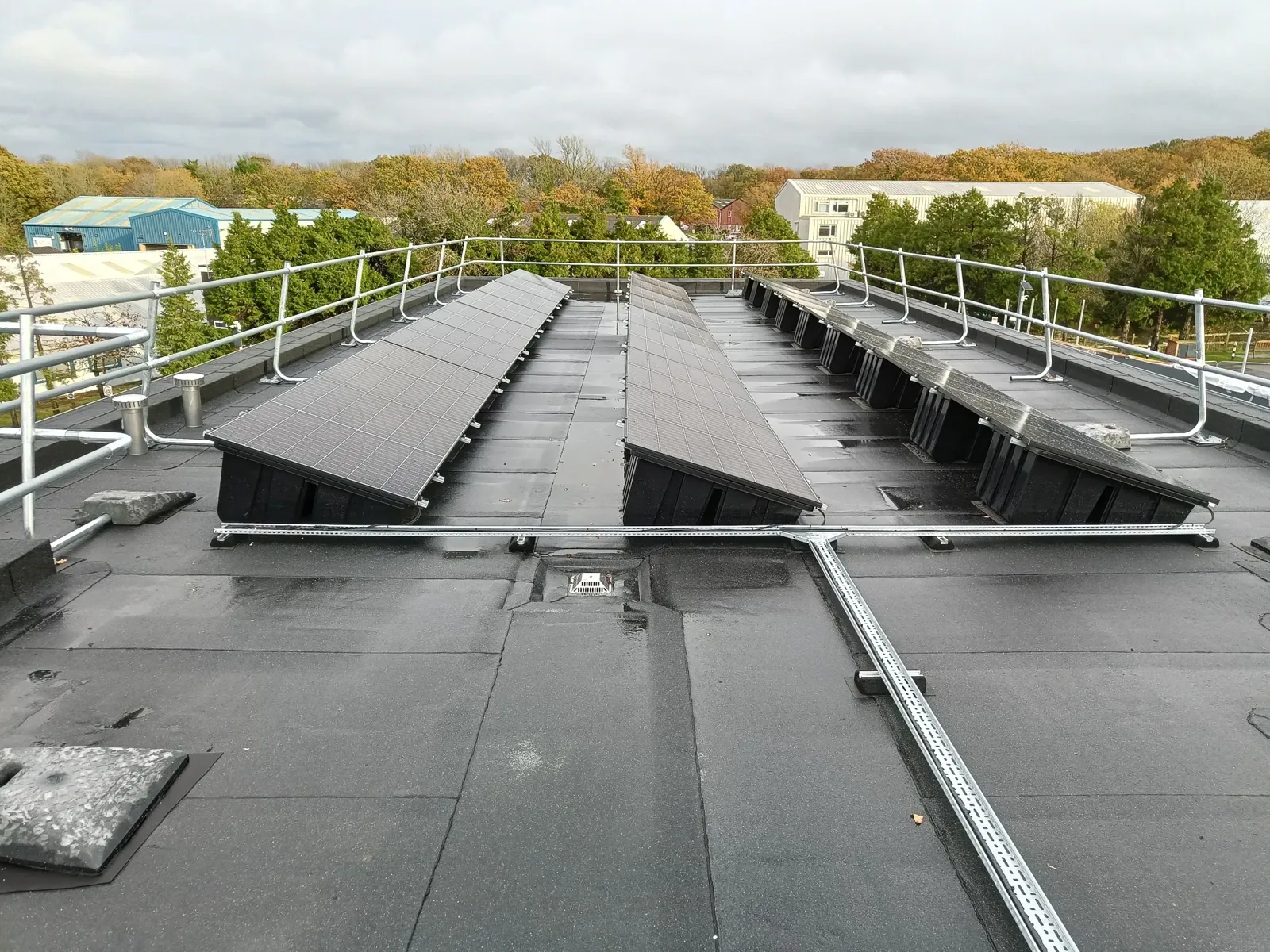 |
Choose Attachment and Waterproofing Details
Solar supports may connect through roof penetrations, ballast, attachment assemblies or other methods specified by the array designer. Each method affects the roofing detail differently. A penetration needs a flashing connection compatible with the membrane. A ballast arrangement adds weight and can change access or drainage. We review the proposed roof interface and identify where the roofing system needs reinforcement or a coordinated detail.
Drain paths must remain accessible after modules and wiring are installed. We review array layout against scuppers, drains, equipment curbs, expansion joints and roof edges. A rooftop equipment and support inspection can help address existing penetrations or supports that share the proposed work area. The layout should preserve service routes and avoid trapping debris or water around a support base.
A flashing detail review may be needed for proposed penetrations or an existing curb. If seams or membrane are already failing, a seam repair should be completed and inspected before the array limits future access. The roofing and solar contractors coordinate the sequence so penetrations, supports and waterproofing are installed in the agreed order.
Warranty terms vary by existing roof and project documents. We review available roof records and identify who needs to approve proposed attachments or service. No roof warranty should be assumed to cover a change that has not been reviewed under its own terms. The owner can provide the relevant documents for the appropriate parties to assess.
A solar contractor may request a roof-ready letter, but that does not replace an assembly review. We inspect membrane condition, attachment, insulation, drainage and the proposed support layout before identifying roofing work that should happen first. If a future array adds foot traffic or penetrations, the scope should preserve service paths and leave drains reachable. The roofing record can show the areas prepared, details completed and any condition left for the solar designer or structural professional to resolve.
Complete Roof Work Before Solar Mobilization
If the roof needs repairs or replacement, the sequence should be settled before panels or supports restrict access. A recover evaluation examines retained layers and attachment to see whether the roof can support planned solar penetrations and service pathways. A commercial roof replacement may be the better preparation when the assembly has widespread failure or wet material. We define repair areas, drainage and flashing work so the solar contractor can coordinate its layout around the completed roof.
Cost and timing depend on roof access, surface preparation, the number of penetrations, membrane type, testing, insulation and any deck repairs. Solar project schedules also depend on equipment delivery, design approvals and permit requirements, which are coordinated by the project team. We identify our roofing scope, assumptions and interface points so the owner and contractor can plan the sequence without treating roofing readiness as structural approval.
During roofing work, we keep exposed areas limited and secure them at the end of each shift. Rain or a wet substrate can change installation timing in Vancouver. The facility contact can confirm whether classes, production or customer access need protection. We document completed areas and any condition that remains outside the agreed roofing scope.
Plan Future Access and Roof Maintenance
After the array is installed, maintenance access still matters. Drainage routes, membrane seams, flashings and penetrations need periodic review, with safe paths between modules and service points. The owner should retain final array drawings and roofing records so later crews can distinguish solar equipment from roof details and avoid unplanned damage during service.
A preventive maintenance program can document accessible roof areas and note any restrictions caused by the array. A roof warranty management service can organize relevant records and service obligations. Send the address, roof records, solar layout and project contact to begin the review.
We update findings when later roof work or equipment service changes a penetration or access route. The record identifies the area inspected and any roof surface that could not be reached beneath or around the array.
Keep Roofing and Solar Records Together
Solar-ready closeout identifies the roof sections reviewed, visible conditions, completed repairs, photos and interface details discussed. It lists limitations and the items that remain with the solar designer, structural engineer, electrical contractor or property team. Keep the final array plan with the roof record so future service crews can distinguish equipment from waterproofing details.
Commercial Roofing Questions
Does a roof readiness review replace an engineer’s structural assessment?
No. Our roof review documents visible roofing conditions and waterproofing interfaces. Structural capacity, wind design and array engineering belong to the project professionals responsible for those decisions.
Should the roof be renewed before a solar array is attached?
Membrane condition, attachment, moisture, expected access and project requirements guide that choice. We inspect the roof and identify repairs or testing that should be addressed before the array limits access.
How do solar supports affect roof drainage?
Supports and wiring can change access and collect debris if the layout is not coordinated with drains and scuppers. We review the roof interface and drainage path against the proposed equipment locations.
Can existing roof warranty terms cover solar penetrations?
Coverage depends on the existing documents and proposed attachment details. We review available roof records and coordinate the roofing interface, while the responsible parties determine applicable warranty terms.
Prepare a Commercial Roof for Solar Send the Vancouver property address, roof records, proposed array layout and project contact. We will inspect the roof and identify repairs, access and waterproofing coordination needs. Request a roof assessment or call 555-555-5555.