Commercial Roof Maintenance in Vancouver, WA
Plan commercial roof maintenance in Vancouver with drain cleaning, flashing checks and documented findings that help catch small defects before leaks spread. A drain basket covered with leaves can slow the roof's drainage route before anyone sees a ceiling stain. Scheduled maintenance in Vancouver, WA gives facility staff a regular look at outlets, seams, flashing and equipment areas while those details remain accessible. The mix of distribution and manufacturing at Columbia Business Center can mean different roof layouts and service equipment from one building to another. We record each inspected area, clear removable debris where appropriate and identify repairs that need separate approval. Maintenance is a planned visit with specific checks and a written record. We look for punctures, open laps, loose terminations, debris, blocked drains and changes around curbs or rooftop equipment. Photos and a marked location show what needs attention. A full roof inspection can be added when the building has repeated leaks or broader condition questions. For a single confirmed defect, a repair scope can address the observed failure. Check the Water RouteWe begin with roof access and the areas that direct water off the building. Drains, scuppers, gutters and overflows are checked for debris, loose strainers, damage and visible restrictions. We follow the path from the roof surface to each outlet and note low areas where water appears to remain. Clearing a drain can restore flow when debris is the cause. A low spot or raised outlet may call for a separate correction, so we distinguish a blockage from a condition that needs design or deck work. Vancouver's wet cool season brings repeated rain, making clear outlets and intact flashing practical maintenance priorities. Winter wind can move debris and test roof edges, while occasional snow and freeze periods make it useful to know whether drains and overflows are open. Warmer summer weather can expose movement at old patches or sealant. We do not treat a seasonal visit as proof that the entire assembly is dry. We report what was visible and recommend moisture testing when signs point below the membrane. We also inspect laps, seams, penetrations, curbs, edge metal and wall transitions. Loose membrane, cracked sealant, open flashing or an unprotected puncture can create a water path. Rooftop service work may disturb a membrane or leave debris near equipment. We check around HVAC units, vents and access walkways, then note areas where future service should use protection. The goal is to identify a developing defect while the repair area can still be clearly located. | 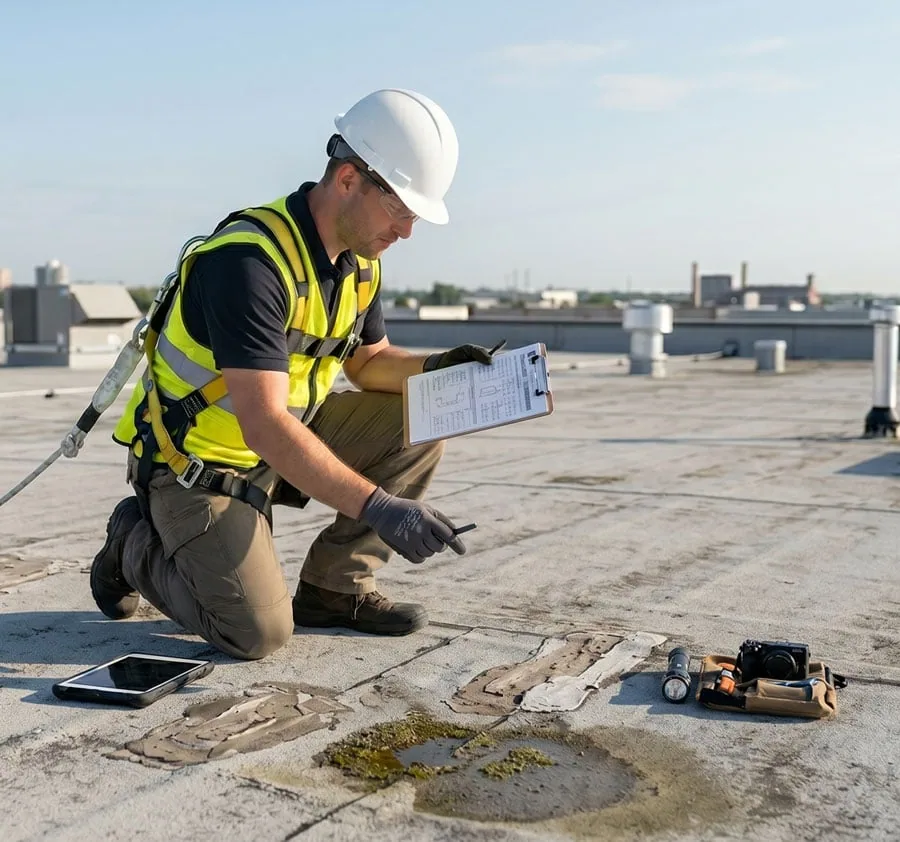 Plan Commercial Roof Maintenance Request a roof assessment or call 555-555-5555.  |
Keep Details in Working Order
Small maintenance corrections can include clearing debris, removing abandoned material or securing a loose component when the condition and scope allow. Permanent membrane and flashing repairs need compatible materials and a prepared surface. A temporary sealant bead over a moving lap may hide the opening for a short time without correcting the connection. We separate routine work from a repair that requires a defined scope, material selection or owner approval.
Roof edges and penetrations deserve attention after equipment service or other rooftop access. A contractor moving a unit or cable can puncture a membrane, dislodge flashing or leave sharp debris behind. We inspect the work zone where access is available and record damage that needs repair. At buildings around the Columbia Business Center, rail, barge and industrial activity may shape safe roof access and staging. The facility contact can identify service schedules and restricted areas before the maintenance visit.
Maintenance does not make an aging or failing roof new. It can preserve drainage, identify leaks early and give the owner evidence for repair or replacement planning. If several seams have separated or wet insulation appears in separate zones, a maintenance note alone is not enough. We explain when the observed pattern calls for a recover assessment or a replacement review. The decision depends on the assembly and conditions found, not only on a calendar reminder.
Set a Useful Visit Rhythm
Visit timing should reflect roof condition, building use, recent work and exposure. A roof with recurring debris at outlets may need more frequent drain checks than a section with clear access and no recent reports. Vancouver's wet months create a useful point for checking drainage and flashing before and during the rainy period. After major rooftop service, a focused review can look for disturbed membrane and new penetrations. We can set a schedule around those conditions and the facility team's access windows.
Multi-building portfolios benefit from separate records for each roof area. Clark College's Vancouver campus includes nursing, dental hygiene, industrial arts and culinary arts programs, with public and institutional activity around Central Park. A maintenance route there would need to label each building and coordinate roof access with current use. Elsewhere, a property near I-205 may need visits scheduled around loading or tenant traffic. We record which areas were reached and identify any section deferred because of access or weather.
Maintenance cost and time depend on roof area, access, debris volume, number of outlets and details, rooftop equipment and the number of repairs identified. We describe the work included in a visit and list repairs separately when they require added materials or access. If rain or unsafe conditions prevent a proper check, we state which areas need another visit. A clear scope helps the owner compare findings over time without assuming every roof needs the same work.
Keep the Roof Record Current
After each visit, the facility contact receives notes on the inspected areas, photos, marked findings and any completed minor maintenance. We list open repairs, monitored conditions and access limits. The record can track when a drain was cleared, where a seam was checked and whether an earlier defect changed. That creates a practical baseline for the next visit and helps the owner decide which work needs a separate scope.
A roof record is more useful when it stays with the building plans and service history. The condition report can support capital planning when a repair pattern changes or several zones show deterioration. For a property near Clark College and Central Park, an updated access and roof-area map also helps coordinate inspections around institutional activity. We can revisit prior findings and note whether the visible condition has remained stable or needs action.
Commercial Roofing Questions
What does a scheduled roof maintenance visit include?
We inspect accessible seams, flashing, edges, penetrations, equipment areas and drainage points. We remove loose debris from outlets where appropriate, photograph findings and mark locations that need repair or follow-up. The visit record also states which areas could not be reached and whether a separate moisture survey or repair scope is needed.
Can maintenance stop a roof from needing replacement?
Maintenance can help catch defects, keep drainage clear and support timely repairs. It cannot restore membrane or insulation that has failed across a broad area. We report the condition we see and explain when isolated corrections remain practical or when a replacement review should be considered.
Should we schedule a visit after HVAC work?
A focused check can look for punctures, loose flashing, disturbed membrane and debris left near the service area. We inspect accessible roof details around the equipment and record any change. Share the service location and work date so the visit can start at the correct curb or roof section.
How do we compare maintenance findings year to year?
Keep each report tied to a marked building and roof area, with photos and notes on drains, seams, repairs and access limits. We can compare new observations with prior conditions and identify changes that need action. Separate records matter when buildings have different roof systems or drainage routes.
Plan Commercial Roof Maintenance Send the Vancouver property address, building use, roof areas and recent leak or service reports. We will define an inspection route and provide photos, marked findings and maintenance priorities for the facility team. Request a roof assessment or call 555-555-5555.