KEE Commercial Roofing in Vancouver, WA
Assess KEE commercial roofing in Vancouver for welded seams, flashing, attachment and rooftop exposure. We document the assembly and repair needs. A roof with frequent service traffic around exhaust equipment needs a membrane and detail plan that fits the work. KEE roofing in Vancouver, WA uses a PVC-based alloy membrane whose formulation includes ketone ethylene ester. We inspect the existing roof, attachment, seams and roof penetrations before recommending installation or repair. Port of Vancouver operations include food and grain processing, metals and shipping. We review the actual roof exposure and process information rather than treating an industry name as proof of a specific condition. KEE is a thermoplastic membrane, so sheet seams are heat welded. A sound weld needs a clean, compatible surface and full contact across the lap. We inspect field seams, corners, patches, curb flashing and perimeter terminations. A hands-on inspection records the visible condition. If water is appearing inside, a leak tracing service can follow the entry path before the membrane is repaired. Understand the Alloy MembraneKEE is related to PVC but uses an alloy formulation with a different balance of properties. It remains a sheet membrane with welded seams and system-specific flashing. The roof's environment, service traffic, attachment and repair history affect whether it suits the building. We check near exhaust outlets, walk paths and equipment curbs for deposits, surface change or repeated patching. Those observations help define what should be reviewed before material selection. Thermoplastic membrane systems share some installation methods, but material compatibility still matters. KEE, standard PVC roofing and TPO membranes have distinct formulations and repair guidance. A crew should identify the existing membrane before welding a patch. Mixing unconfirmed materials can weaken a repair. We examine the sheet and available records, then state what is known and what testing or a sample may be needed to confirm it. Vancouver's wet cool months test seams and flashing through repeated rain. Winter wind also puts pressure on roof edges and attachment details. We review perimeter securement, curb corners and drain transitions as part of the same assembly. If standing water remains near a weld, the cause may be a blocked outlet, low roof area or failed detail. We mark that condition and determine whether drainage work or membrane repair should be included. | 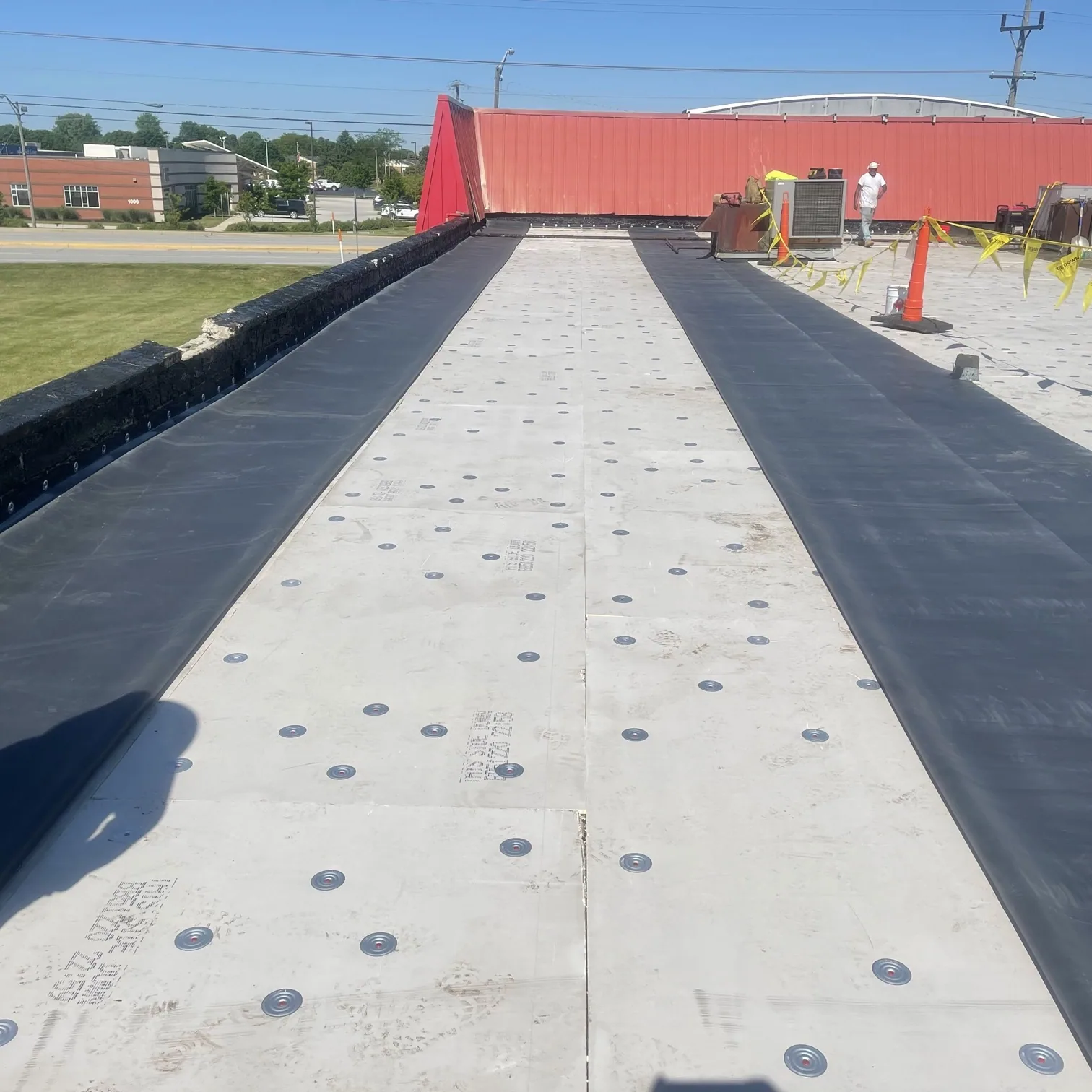 Review KEE Roofing for Your Building Request a roof assessment or call 555-555-5555. 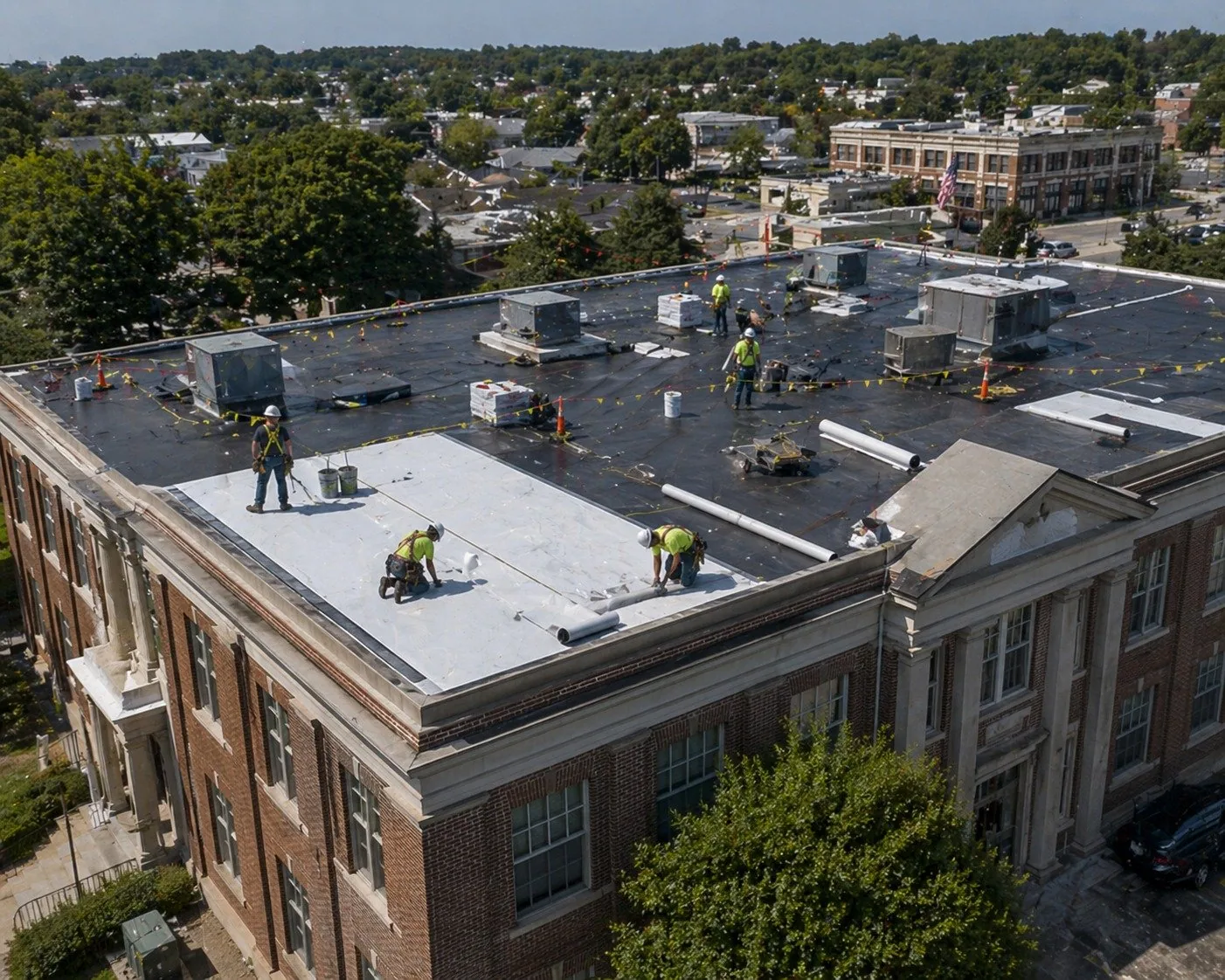 |
Inspect Welds and Transitions
We check whether welds have open edges, contamination, incomplete fusion or wrinkles that concentrate movement. The membrane surface is examined for punctures, abrasions, blisters and patches with lifted corners. At the roof edge, we look for loose terminations and movement at metal joints. At curbs and pipes, flashing must rise above the field membrane and connect without gaps at corners. A defect in one transition can allow water to move beneath the sheet and appear far from the opening.
Attachment matters where wind reaches roof edges or where equipment service brings regular foot traffic. We inspect visible fastener rows or adhered areas and note any membrane that has shifted. Vancouver receives winter wind and rain events, so a loose perimeter is a practical concern. If movement extends beyond one curb, the repair boundary may need to include an attachment zone or a longer run of membrane. We document locations before defining the scope.
Moisture below the sheet changes the project choice. Wet insulation can lose support and cannot be restored by welding a surface patch over it. If visual signs or interior leak reports suggest moisture, an infrared survey with selected core cuts can check the assembly. We separate suspected moisture from confirmed material conditions and mark test locations. For industrial properties around the Columbia River, a building-by-building roof map helps connect each observation to the correct operation.
Build a Compatible Detail
Repair begins with identifying the membrane and preparing a clean surface. We make a compatible KEE weld or patch with continuous edges and connect flashing to sound field material. A patch must extend past damaged material onto membrane that can accept the weld. At a curb, we check the base flashing and corners. At drains, the membrane needs a secure connection to the clamping assembly without blocking the outlet.
Application conditions affect the weld. Moisture, dirt, cold or an overheated surface can weaken the connection. We prepare a sample weld or test the field condition where needed, then set the equipment for the material and ambient conditions. A failed seam may need more than a bead of sealant. We open and prepare the lap as required, then inspect the completed bond.
Where damage is limited, a planned membrane repair may be sufficient. Broad separation, wet insulation or repeated failures may call for a replacement assessment. A recover can remain an option only when the existing assembly is stable and applicable requirements allow. KEE work calls for a product-specific assembly review; when insulation or layers change, confirm the Vancouver permit path before finalizing the system detail.
Maintain the KEE System
Closeout records should identify KEE membrane areas, repaired welds, curb details, drains and edge terminations. We photograph completed work and mark locations on a roof map. If moisture or an adjacent condition remains, the report says where it is and what follow-up may be needed. That keeps future work tied to the right membrane and avoids treating all roof sections as interchangeable.
In Fruit Valley and the Port Industrial District, active marine and industrial uses can affect roof access windows and staging. Keep those operating constraints with the roof records. A maintenance visit can inspect seams, penetrations and drainage after service work or before the rainy months. Photos from later visits can show whether an earlier weld or flashing transition remains unchanged.
Commercial Roofing Questions
How is KEE membrane different from standard PVC?
KEE uses a PVC-based alloy formulation that includes ketone ethylene ester. Both are thermoplastic sheets with heat-welded seams, but their material formulations and repair instructions differ. We identify the existing membrane before proposing a weld or patch and use materials compatible with that system.
Can you weld a KEE patch over an old repair?
We first check what material the prior patch uses and whether it is bonded to sound membrane. A new weld needs a clean, compatible surface. If the old repair is loose, contaminated or made from a different sheet, we remove or isolate it as needed and connect the new patch to sound KEE.
Does KEE eliminate chemical damage around exhausts?
No membrane choice removes the need to assess actual exhaust exposure and protect the roof details. We inspect the discharge area and review process information provided by the facility. Surface change, deposits or repeated failures can guide further review, but they do not by themselves identify the chemical or its source.
What should be included in KEE closeout records?
Record the membrane area, repair material, weld locations, flashing and drain work, and any moisture testing. Photos and a marked plan help the next inspector distinguish KEE from other roof sections. We note any area left for monitoring or any limit on what could be checked directly.
Review KEE Roofing for Your Building Send the Vancouver property address, building use, KEE records if available and any reported seam or flashing concern. We will inspect the membrane and document compatible repair or installation options. Request a roof assessment or call 555-555-5555.