
Commercial Roof Leak Repair in Vancouver, WA
Trace active commercial roof leaks in Vancouver to the entry point, protect affected areas and repair the membrane, flashing or drainage detail. A damp ceiling tile below a warehouse curb gives the first clue, not the roof opening itself. For commercial leak repair in Vancouver, WA, we start with the interior report and follow the likely water path across the roof. Water can move along a deck, insulation joint or framing before it drips into a room. The Port of Vancouver serves warehousing, food processing and shipping operations, while Columbia Business Center mixes distribution and manufacturing. In each building, we locate the leak without assuming that the visible stain marks the repair point. We inspect membrane laps, penetrations, wall flashing, roof edges and drains above the affected area. Photos and a marked location help the facility director understand what we found. If the roof is actively taking water, our emergency roof response can provide temporary protection while a permanent repair is prepared. When the condition is stable, a planned roof repair can correct the failed seam, flashing or membrane detail. Follow the Water PathWe gather the time and location of the interior report, whether water appeared during rain or after equipment ran, and whether the affected area has leaked before. Those details help narrow the roof area to inspect. We look above and uphill from the ceiling mark, then check nearby curbs, vents, skylights, wall joints, seams and drains. A roof can have more than one opening, so we keep each observation tied to a location instead of treating all moisture as one failure. Vancouver's wet cool season brings repeated rain across the region. A small opening at a flashing corner or membrane lap can admit water over several weather cycles. We check for loose edges, failed sealant, open seams, punctures and drain restrictions. Winter wind can drive rain against roof edges and wall transitions. The Columbia River waterfront and industrial properties near Terminal 1 add working roof contexts, but the roof itself must tell us where water is entering. A flashing failure review can help when the gap lies at a wall, curb or penetration. Interior moisture can extend beyond the opening. Wet insulation may hold water and spread it later, even after a surface repair. We note soft or stained areas, membrane blisters and unusual temperature patterns. If visual inspection cannot show how far moisture extends, an infrared moisture survey and selected core cuts can help map the affected assembly. The report distinguishes suspected moisture from confirmed wet material and identifies any opening needed to make that distinction. |  Trace a Commercial Roof Leak Request a roof assessment or call 555-555-5555. 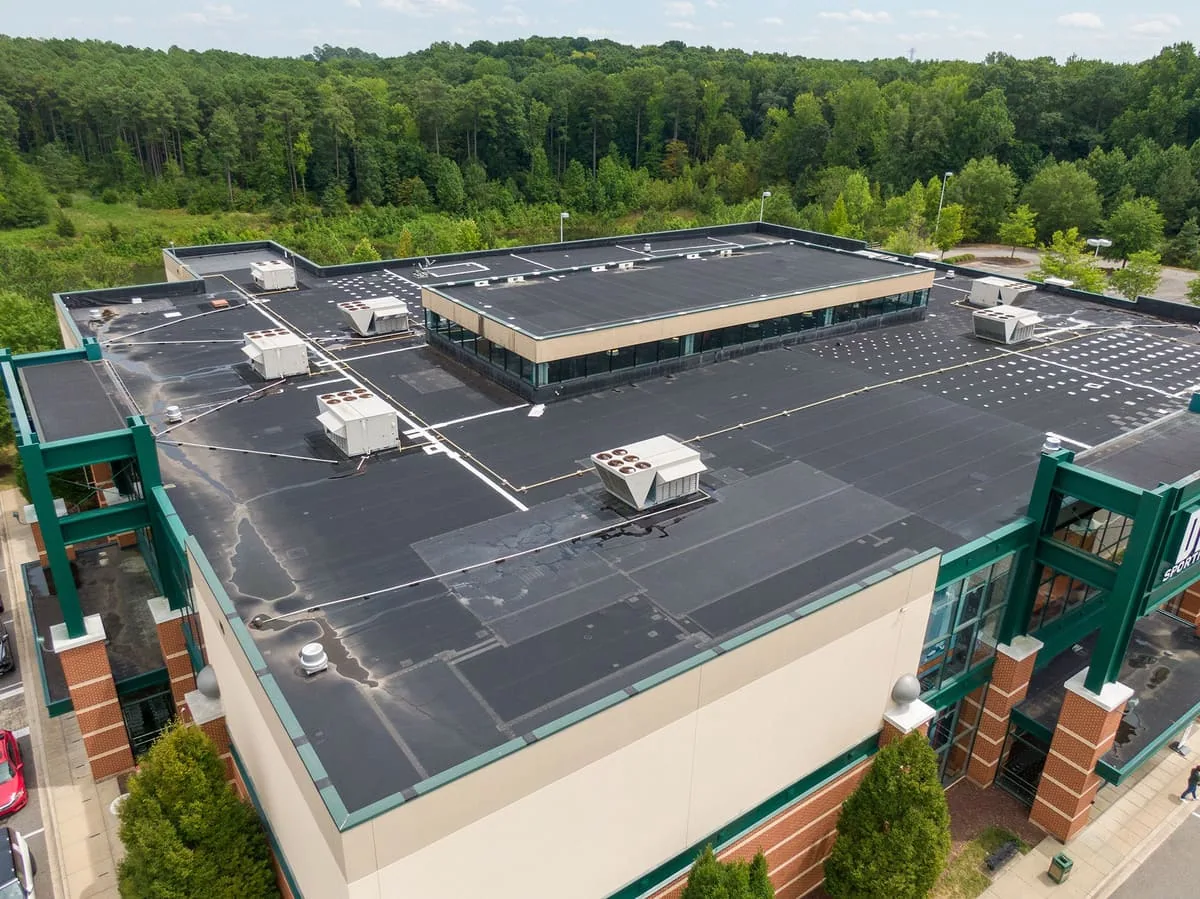 |
Limit Interior Damage
When water is entering now, immediate protection is the first task. We identify the active path, use temporary covering or dry-in where conditions permit, and communicate what interior areas need to be protected. The building contact can move vulnerable inventory or equipment from the affected zone and report any safety concern. On an occupied site near I-5, the route from roof access to the leak area and the work zone below should be clear before materials are brought in.
Temporary protection buys time. It is not the permanent roof correction, and it has limits if water is trapped inside the assembly or if wind and rain continue. We document where the cover is placed, what it protects and what remains exposed. For active failures at night, on weekends or holidays, emergency response remains available around the clock. Once conditions allow, we return to inspect the underlying membrane and complete the permanent repair with compatible materials.
Inside, the facility team should record when water appears and which ceiling, wall or equipment area is affected. If a ceiling is opened, photographs can show the wet area and help compare it with roof findings. Avoid disturbing electrical systems or ceiling materials when that could create a safety issue. We coordinate access with the building contact and keep the repair plan specific to the affected space. The interior record supports the roof investigation, but it does not replace inspection of the membrane and flashing above.
Correct the Entry Detail
Permanent repair begins with a sound connection to the existing roof. We remove loose or failed material as needed, prepare the surface and repair the membrane or flashing with a compatible method. A failed thermoplastic seam may need cleaning and welding. EPDM calls for materials suited to its membrane and bonding system. At a curb, the flashing must integrate with the field membrane and direct water outward. Sealant may complete a detail, but a bead placed over a moving or wet joint will not correct the underlying defect.
Drains and scuppers are checked when water backs up or remains near the leak. We clear debris where appropriate and inspect whether the outlet, bowl or surrounding membrane is damaged. Vancouver's occasional snow and freeze events can make standing water and restricted outlets more consequential. If ponding comes from a low roof area rather than a blockage, the repair may need to address slope or deck condition. We explain this separately from the leak repair so the owner can choose the right follow-up scope.
Before closing out, we check the repaired lap, flashing, patch or outlet connection and photograph the finished detail. If wet insulation or deck damage requires added work, we show the location and requested correction. A photo-supported condition report keeps the repair location clear for future maintenance. Where leaks recur across several roof areas, a broader inspection can determine whether the problem is isolated or signals system-wide deterioration.
Keep a Useful Leak Record
A useful closeout note states where water appeared inside, where the entry point was found, what material was repaired and whether moisture remained nearby. We include images that connect the interior mark to the roof location. If a later leak occurs, facilities staff can compare the new route with the original evidence. This also helps separate a recurring failure from a new opening elsewhere on the roof.
Drains, rooftop equipment and flashing details benefit from periodic checks, especially after the wet season or service work. A maintenance visit can look for fresh punctures, debris, separated seams and changes around curbs before water reaches occupied space. For a building by Terminal 1, roof access and active mixed commercial uses can be considered in that visit's schedule. Each finding remains tied to the building and roof area inspected.
Commercial Roofing Questions
What can make a ceiling mark appear away from the roof opening?
Water can travel along a deck, insulation joint or structural member before it reaches the ceiling. We use the interior location as a starting point, then inspect roof details above and around it, including curbs, seams, drains and wall transitions. Marking the route helps distinguish the point where water appears from the detail where it enters.
What short-term protection can limit exposure before permanent work?
We can provide temporary covering or dry-in when the roof condition and weather allow. That protection limits exposure while we prepare a permanent repair, but it may not stop water already held in the assembly. We state what area is covered, what remains at risk and when the roof can be opened for a lasting correction.
How do you check for wet insulation around a leak?
We inspect the membrane and look for visible signs such as soft areas, blisters or displaced material. Infrared patterns can help select locations for follow-up, while core cuts confirm the material condition at those points. We mark confirmed wet insulation separately from suspected areas and explain where more investigation may be useful.
What if our warehouse has more than one leak?
We map each interior report and investigate the related roof area. Several leaks may come from separate punctures or from a shared failure at an edge, drain or system detail. The findings show which repairs can be completed together and whether a broader inspection is needed to understand the pattern across the roof.
Trace a Commercial Roof Leak Send the Vancouver property address, building use, interior leak location and when water appeared. We will start at the correct roof area, document the likely water path and outline immediate protection or permanent repair. Request a roof assessment or call 555-555-5555.