Rooftop Equipment Curb and Support Repair in Vancouver, WA
Inspect and repair commercial rooftop equipment curbs and supports in Vancouver, WA. We check flashing, attachment, drainage and the affected roof area. A leaking equipment curb can send water into a building even when the unit above it is still operating. We inspect and repair commercial rooftop curbs, equipment supports and pipe supports in Vancouver, WA, checking the roof connection, flashing and nearby membrane. Vancouver's wet cool season brings repeated rain, while winter wind can put pressure on exposed equipment and support details. A sound unit does not confirm a sound roof connection. The Vancouver VA Campus includes patient-care, imaging, specialty, logistics, maintenance and administrative buildings. Columbia Business Center includes industrial, manufacturing and distribution properties. Both contexts involve different access and operating needs. A commercial roof inspection documents the curb and roof area, while an active leak investigation traces interior water to its likely entry point. Check the Connection Around the UnitWe inspect the curb sides, corners, cap, flashing and membrane tie-in for separation, cracked sealant, loose metal, open laps or movement. The curb should direct water onto the roof rather than channel it beneath the flashing. At pipe supports, we check the base and any membrane boot or flashing that protects the penetration. A support that has shifted can strain its connection and create an opening nearby. Water may travel away from the curb before appearing indoors. We start with the room, ceiling or equipment area reported by the facility, then check the roof detail above and around it. Wet insulation can extend beyond the visible stain. If the condition below the membrane cannot be confirmed, we explain whether a moisture survey or test opening could show the extent of damage. Equipment service can leave tool marks, dropped fasteners or foot-traffic wear around units. We ask who services the equipment, how often access is needed and whether future work is planned. A walkway or service path can protect the membrane if it is compatible with the roof system and does not block drainage. The site contact should confirm equipment shutdown and safety requirements before any work near the unit. Vancouver's occasional summer heat can affect exposed sealants and coatings, while winter rain tests the curb transition. We record current material condition and do not assume that age or appearance alone explains a leak. Photos show each side and the field membrane around the connection. |  Inspect a Roof Equipment Connection Request a roof assessment or call 555-555-5555. 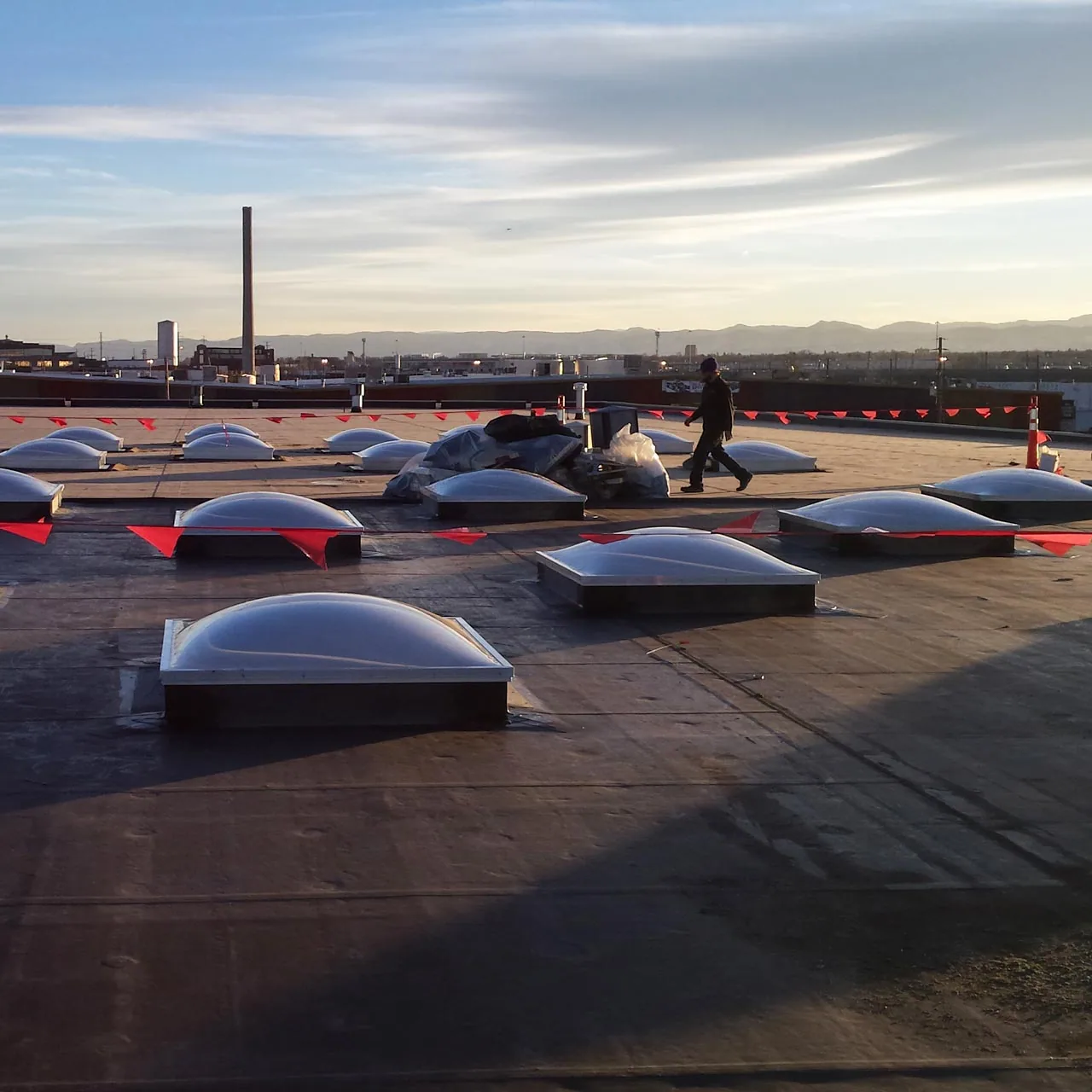 |
Separate Roofing Work From Equipment Work
Some leaks can be corrected by replacing failed flashing or reconnecting membrane to a sound curb. A damaged or undersized curb may need adjustment, and a support designed for the load may require review by the mechanical or structural team. We identify the roofing scope and coordinate questions outside that scope with the facility contact. We do not change equipment fastening without the required direction.
At the VA campus, access near clinical or support buildings must follow the facility's procedures. At Columbia Business Center or the Port of Vancouver Industrial Waterfront, active production, logistics and shipping can affect work routes and staging. Those local uses call for different coordination, but the building representative must confirm the actual access requirements for each property.
A curb and support service visit is focused on the equipment connection. A flashing repair inspection may be needed where the curb perimeter has separated. A membrane puncture repair addresses a cut or impact near service access. We record related conditions separately so one repair does not imply that the entire roof has been reviewed.
If several curbs leak or the membrane around equipment is deteriorated, the issue may extend beyond one penetration. We inspect adjacent seams, attachment, drainage and wet material before comparing repair with recover or replacement. A larger recommendation should reflect observed conditions and any test results.
Restore Flashing and Support Details
Repair begins by removing loose material and exposing enough of the curb or support connection to reach sound membrane. Compatible flashing is installed so it connects to the field membrane and sheds water outward. A boot, metal cap or liquid-applied detail may be used only when suited to the roof system and geometry. If wet insulation or damaged cover board is found beneath the opening, we document it and review the added scope before closing the area.
Cost and schedule depend on curb dimensions, roof type, access, unit location, material compatibility and whether equipment must be moved or protected. Multiple penetrations may need a work sequence that keeps the building operating. We coordinate roof access and any interior protection with the facility contact. If the surface is wet or weather prevents a lasting connection, temporary protection and follow-up timing are stated clearly.
For an urgent opening, around-the-clock roof response is available, including nights, weekends and holidays. Permanent repair follows when safe access and material conditions allow it. Crews limit open areas and secure the roof before leaving. The closeout identifies the curb or support repaired and shows the finished connection in photos.
Coordinate With Facility Maintenance
Before arriving, we confirm the property address, equipment contact, roof access, escort or check-in procedure and any work-hour restrictions. The facility may need to notify occupants or coordinate a unit shutdown with its mechanical contractor. We agree on the work boundary and who can authorize a change if concealed damage appears. For a shared roof, owner and tenant contacts may both need to participate.
A preventive roof maintenance visit can include a check of curbs, pipe supports, drains and membrane transitions. A condition report can preserve equipment locations, photos and access limits for future service. For a multi-building healthcare property, a Vancouver VA Campus roof visit requires the proper building and facility contact to be identified before scheduling.
When the equipment is replaced later, the roofing connection should be reviewed after the mechanical work. We can document the changed curb, flashing or support and any remaining roof concern. This keeps the roof record aligned with equipment service rather than leaving an undocumented penetration change.
Record Each Penetration Clearly
Closeout names the building, unit or pipe support, roof section, completed detail and photos. It notes any access limitation, temporary protection or wet material that remains under review. The facility team can file the record with mechanical maintenance and roof service history so future crews can find the same connection.
Send the Vancouver address, building use, equipment location, leak history and roof access contact. We will inspect the curb or support, identify related roof conditions and define the repair or testing needed. The scope stays tied to the penetrations and roof areas actually reviewed.
If a condition lies outside roofing work, we identify the coordination question and the party whose direction is needed. That keeps roof repair, equipment service and structural review distinct within the project record.
Commercial Roofing Questions
Can you stop a leak around an HVAC curb?
We inspect the curb, flashing and membrane connection, then define a repair that suits the roof system. If the curb or substrate needs adjustment, we identify that coordination item before the roofing scope is finalized.
Does a new rooftop unit require new flashing?
Any unit or curb change can affect the roof connection. We inspect the existing detail and coordinate with the mechanical contractor so membrane and flashing are restored after the equipment work.
What should we provide before a curb repair visit?
Send the address, unit location, leak history, equipment contact and roof access instructions. If service or replacement work is planned, include the schedule and any shutdown or escort requirements.
Can you inspect pipe supports and conduit penetrations too?
Yes. We can document visible support bases and flashing details within the agreed roof area. The report identifies each penetration and any access limitation or follow-up needed.
Inspect a Roof Equipment Connection Provide the Vancouver property address, equipment location, reported condition and facility contact. We will confirm access, inspect the curb or support and define the roofing work needed. Request a roof assessment or call 555-555-5555.