
Commercial Roof Seam Failure Repair in Vancouver, WA
Repair split or open commercial roof seams in Vancouver, WA. We inspect the membrane lap, trace moisture and define a compatible repair scope. A narrow split at a membrane lap can admit rain long before the roof looks broadly damaged. We inspect and repair commercial roof seams in Vancouver, WA, tracing the opening, checking nearby attachment and documenting what lies within the repair boundary. A seam assessment records lap direction, separation length, substrate condition and earlier patches so the repair detail matches the observed failure. An open seam therefore needs a repair method matched to the membrane and the condition around it. Columbia Business Center contains manufacturing, warehouse and distribution properties where access may need to be coordinated with active operations. The Fourth Plain International District links downtown and Vancouver Mall through a corridor of storefronts. Both settings require property-specific access plans. A commercial roof inspection documents the affected lap, while a wind damage review can help if the seam opened with other displaced roof details. Locate the Open LapWe look for separation along membrane laps, welds or adhered seams, then check how far the gap extends and whether water or debris has entered. Surface contamination, weak adhesion, incomplete welding or later damage can affect a seam. A visible edge is only one clue. We inspect the adjoining membrane for wrinkles, movement, patches and attachment concerns that could place stress on the connection. The reported interior location helps set the roof walk, but water may travel below the surface before appearing indoors. We trace toward the likely entry point and check nearby drains, penetrations, curbs and wall transitions. Wet insulation can hold water beyond the seam opening. If its extent is not visible, we identify whether moisture mapping or a test cut would clarify how far material must be removed. Membrane types require different seam techniques. TPO and PVC seams are commonly heat welded; EPDM relies on compatible primers and seam tapes or adhesives. Modified bitumen has different lap construction. We identify the roof system from exposed material, records or other visible details before selecting a repair. If the membrane type is uncertain, we do not apply an incompatible product based on color alone. At a property in Lower Grand, office, industrial and flex-industrial buildings sit within an employment area that also includes Grand Central retail. The surrounding uses do not identify a roof's assembly. They do remind us to confirm the correct building and maintenance contact, especially where a leak report, roof plan and tenant work order use different labels. | 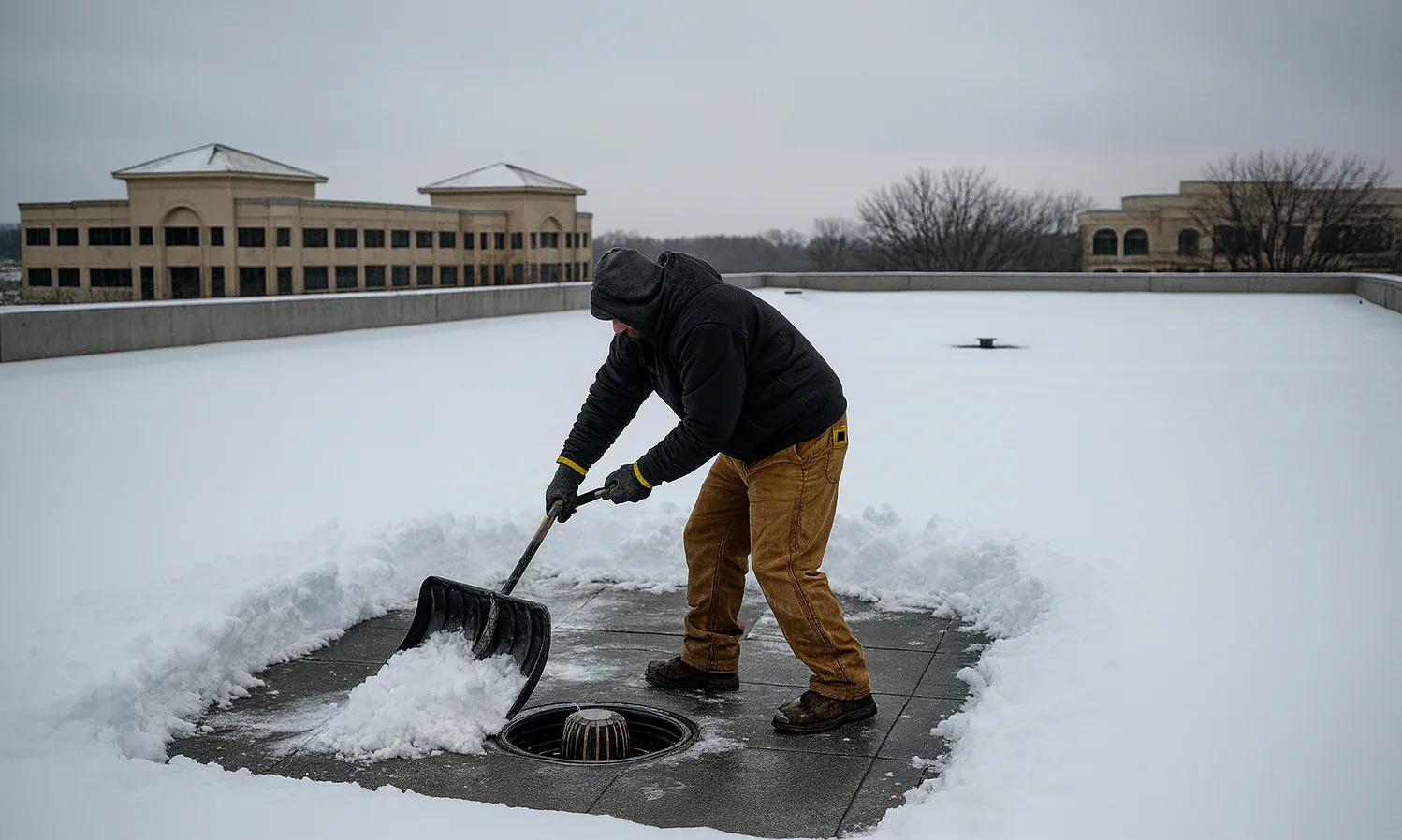 Inspect an Open Roof Seam Request a roof assessment or call 555-555-5555. 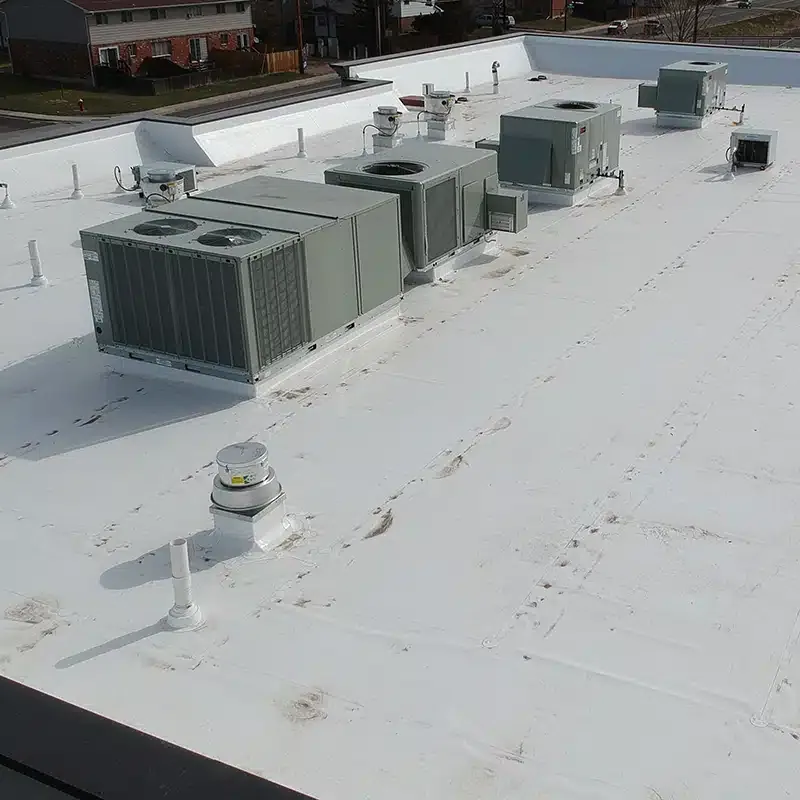 |
Check What Is Pulling on the Seam
A seam can open because the connection failed or because movement is stressing it. We inspect the nearby perimeter, penetrations, equipment supports and prior patches for signs of shifting or loss of attachment. If the membrane has lifted along an edge, a short seam split may be part of a broader wind or securement concern. If one lap is open but surrounding material remains stable, a localized repair may be enough.
Vancouver's wet season keeps roof details exposed to repeated moisture. Standing water near an open lap can prolong contact and reveal weak drainage, but the pool itself does not prove why the seam failed. We note whether the seam crosses a low area and whether drainage should be evaluated separately. A ponding water assessment can review a low area, while a flashing repair evaluation addresses a separated wall or curb connection.
We record the opening with a marked location, photos and seam length or affected section description where practical. If an earlier patch lies over the original lap, we note that overlap and whether the seam can be examined without removal. We distinguish the visible seam condition from conclusions about when it formed or what event caused it. Earlier roof records can provide context but do not replace inspection of the current connection.
Any limitation matters. A wet surface, equipment obstruction or inaccessible roof area can prevent a full view. We identify that limit and explain whether a return visit, drying period or test opening is needed. That gives the owner a clear basis for deciding whether to proceed with a localized repair or gather more evidence first.
Rebuild the Connection
Repair begins by removing dirt, loose material and incompatible patches as needed to expose a bondable or weldable surface. The crew prepares the membrane according to its type and installs a compatible seam repair that extends onto sound material. The scope states whether the original lap is being re-welded, reinforced or replaced with a new membrane strip. At a termination or transition, the seam repair must reconnect with adjacent flashing and edge details.
Cost and timing depend on the seam length, roof system, access, surface condition, moisture and any wet insulation or deck work. A long separation near equipment can require coordination and additional staging. If the assembly is opened and concealed damage appears, we photograph it and review the added scope with the owner before expanding the repair. The recommendation separates the seam work from any unrelated maintenance item.
Water entry may require temporary protection while the surface dries or materials are prepared. We record the protected area and what remains for permanent work. Rain or dew can prevent proper adhesion or welding, so schedule timing follows field conditions. Each open area is closed or secured before the crew leaves, with access and interior protection coordinated through the building contact.
Decide Whether One Seam Tells the Whole Story
A single failure on an otherwise sound membrane may support a local correction. Several open seams, recurring repairs or broad attachment problems may justify a larger review. We compare the affected location with nearby laps and roof sections to see whether the condition is isolated. If wet insulation is widespread or the membrane has deteriorated, replacement may be more appropriate than repeated patches.
A commercial roof repair can address a defined seam. A recover evaluation checks whether an existing assembly can remain beneath a new layer. When broader failure is present, a replacement assessment should define removal, substrate review and new seam details. We explain what evidence supports each option and what testing may change the scope.
After completion, a maintenance inspection can review the repaired area and drainage route. The facility can retain the marked location and compare it with future leak reports. That record helps determine whether water returned at the same lap or began at another roof detail.
Keep Seam Records Specific
Closeout identifies the roof section, seam location, repair method, materials, photos and any access or moisture limits. It records whether temporary protection was used and what permanent item remains. The owner can file the repair with prior inspections and roof plans so the same lap can be checked later.
Send the Vancouver property address, building use, reported condition and any seam history. We will confirm the roof section, document the opening and define the repair or follow-up testing supported by the inspection.
A seam record is useful when it identifies the affected detail rather than labeling an entire roof as repaired. Findings beyond that boundary remain listed as separate observations or questions.
Commercial Roofing Questions
Can an open seam be repaired without replacing the membrane?
Yes, if the surrounding membrane is compatible and sound enough to accept a repair. We inspect nearby attachment and condition, then define whether the lap can be welded or reinforced or whether a larger section is required.
How can we tell whether water is entering through a seam?
We compare the interior report with the seam and nearby roof details, then trace likely paths where access allows. The report states what evidence supports the source and whether concealed moisture needs testing.
Does every roof membrane use the same seam repair?
No. Thermoplastic membranes, EPDM and modified bitumen use different connection methods and compatible materials. We identify the system before selecting the repair procedure.
What if several seams have started to split?
Repeated openings may point to broader deterioration, movement or attachment concerns. We inspect neighboring laps and roof sections, document the pattern and compare local repair with further testing or replacement planning.
Inspect an Open Roof Seam Send the property address, building use, reported leak location and any membrane records. We will inspect the seam, trace nearby moisture and explain the repair boundary. Request a roof assessment or call 555-555-5555.