Wind Damage Roof Repair in Vancouver, WA
Repair commercial roof damage from wind in Vancouver, WA. We inspect edges, flashing and attachment, protect openings and define the permanent repair scope. A bent edge-metal section or a lifted membrane termination can leave the roof vulnerable after a windy period. We inspect and repair commercial wind damage in Vancouver, WA, recording visible displacement, the affected roof area and any opening that needs protection. Vancouver sees winter wind and rain in the Portland-southwest Washington forecast area. That combination makes secure edges and working drainage important while a damaged detail is being assessed. At the Port of Vancouver Industrial Waterfront, industrial and shipping properties have active site operations to coordinate; near Vancouver Mall District, retail access and customer routes can shape staging. Each building still needs its own access plan. A commercial roof inspection checks the roof evidence before the repair boundary is chosen. Find the First DisplacementLoose material can move beyond the point where it first separated. We begin with the area reported by the facility contact and look for a connected pattern at the roof edge, corner, parapet, curb or field membrane. Displaced metal, lifted flashing, fasteners that no longer hold and a separated termination are visible clues. We photograph the location before disturbed material is moved when safe access permits, then compare nearby sections for similar movement. A wind report does not establish that every roof issue came from the same event. Old patches, corrosion, open laps or deterioration may have been present earlier. We record what can be observed and separate it from a suspected cause. If the membrane is loose but not torn, attachment may need closer review. If edge metal has moved, the membrane termination beneath it may also be exposed. A photo of the top surface alone may not show that connection. Water found inside can help set the first inspection area, but the ceiling mark may not sit directly under the opening. We trace the likely water path through accessible roof details, checking transitions, seams, penetrations and drains. Wet insulation can extend beyond the visible stain. If confirming its extent requires a test opening or moisture survey, the report identifies the question that test should answer. |  Inspect a Wind-Affected Roof Request a roof assessment or call 555-555-5555. 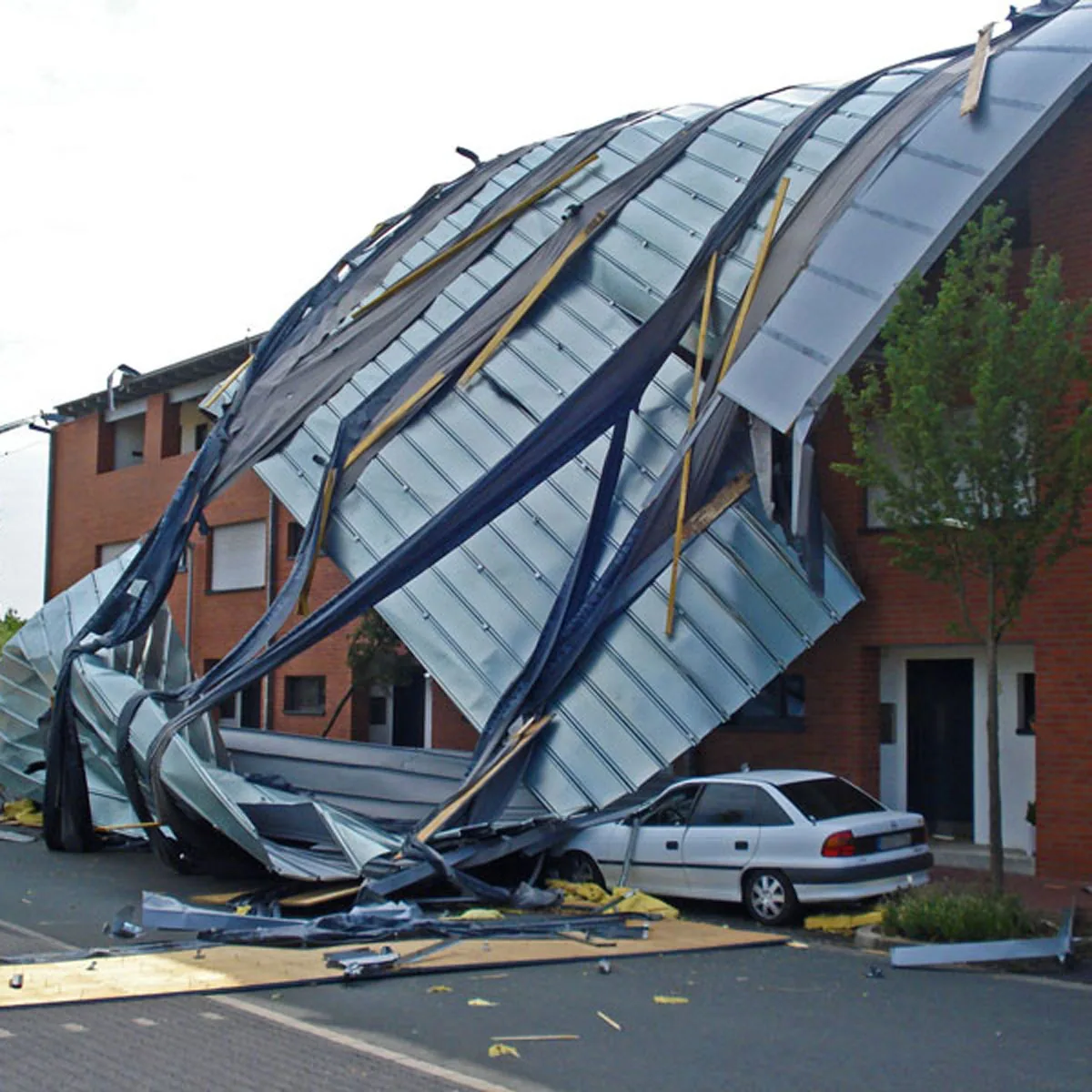 |
Check How the Roof Holds at Its Edges
Wind pressure can act differently at a roof perimeter than across the center of a field. We inspect edge metal, cleats, fasteners, membrane terminations and transitions to walls or parapets for visible separation. A loose coping section may expose the top of a wall detail. A lifted termination can allow water to move under the membrane. We describe which component has shifted and whether the surrounding attachment remains sound where it is visible.
Roof geometry and system type affect the repair. A thermoplastic membrane, adhered EPDM, built-up roof and standing-seam metal panel use different connections. We identify the assembly from visible details or available records before selecting a compatible method. If the attachment cannot be verified without removing material, we state that limitation rather than assuming that added sealant will secure the system.
At Columbia Business Center, manufacturing, distribution, warehousing and outdoor storage make operational coordination relevant to some industrial facilities. The area's use does not tell us whether a roof is exposed, sheltered or damaged. We confirm the actual building, equipment and work zone with the site contact. For a flashing failure or open membrane seam found during the wind review, the repair detail should address that component directly.
Vancouver's wet cool season brings recurring rain, which can enter through a small gap at an edge or transition. We note whether the roof is wet, whether a connection has opened and whether water appears to have reached insulation or deck. This helps separate a securement repair from moisture removal or additional investigation.
Limit Exposure Before the Full Repair
If an opening is active, we determine whether temporary protection can be secured safely in the current wind and surface conditions. The response may use a temporary cover, compatible patch or other dry-in step appropriate to the roof. We label the protected area and explain what remains uncovered. A temporary measure reduces exposure only where it is installed; it does not establish that hidden wet insulation has dried or that adjacent details are sound.
Facility staff may need to move stock, equipment or furnishings away from the interior water path. We coordinate any access near electrical equipment, production lines, customer areas or occupied rooms with the person responsible for the building. At a working property on the Port waterfront, delivery and vehicle movement may need a safe boundary. A storefront near Fourth Plain or the mall area may need another route and notification plan. We confirm these details for the address rather than applying one location-wide assumption.
Emergency response is available around the clock, including nights and holidays, when an urgent roof failure needs assessment. Worker safety and the ability to secure materials still govern what can be done during active wind or rain. If permanent repair cannot be completed on the first visit, we document the protection, access limit and next step. The facility contact receives the open-item list so a temporary cover is not mistaken for a completed repair.
Set a Repair Boundary
Repair scope depends on what shifted and whether the surrounding roof remains suitable for a connection. Refastening metal may be appropriate when the substrate and attachment are intact. A torn membrane may need a compatible patch tied into clean, sound material. At a parapet or curb, flashing must connect to the field membrane and direct water outward. We identify the area included and any related material that must be removed to reach a secure point.
Repeated displacement, broad seam separation or widespread wet insulation can mean the issue extends beyond one detail. A commercial roof repair can address a defined condition; a replacement evaluation may be warranted if the assembly has broader failure. We compare those paths against observed conditions and identify testing or opening needed before a final decision. Cost and duration depend on roof height, access, system compatibility, damaged area, moisture and deck work.
During repair, we prepare the surface, reconnect or replace the failed detail and secure the work against weather as the method allows. Open roof areas are limited and closed or protected before the crew leaves. If the building remains occupied, access, noise, odor and interior protection are coordinated with the facility contact. Vancouver rain can change the order of work, so the daily stopping point is part of the plan.
Keep the Wind Finding With the Roof Record
The closeout record identifies the date, building, roof section, observed movement, photos, temporary protection and permanent work completed. It also notes any area that could not be inspected or any suspected damage that needs another visit. The property team can compare that record with later reports at the same location. If other areas were outside the scope, the closeout does not imply they were cleared.
For a multi-building owner, a roof condition report can keep findings attached to individual roof areas, while a maintenance visit can recheck repaired edges and drains. Provide the Vancouver property address, building use, reported condition and contact for roof access. We will confirm the affected area and explain which repair or follow-up is supported by the visible evidence.
Commercial Roofing Questions
What wind damage should we look for along a commercial roof edge?
Lifted metal, loose cleats, separated membrane terminations, displaced flashing and newly open seams are visible signs to document. We inspect the surrounding connection and photograph the area before material is moved when conditions allow.
Can a loose coping section be reattached?
The repair depends on the condition of the coping, cleats, fasteners, wall and membrane termination beneath it. We inspect those parts and define whether reattachment is sufficient or whether related material must be replaced.
When can permanent work follow a temporary cover?
Permanent work can proceed when access is safe and the roof surface is ready for the chosen repair method. Wind, rain, moisture and the condition of the surrounding membrane affect that timing.
How do you separate wind damage from older wear?
We record displaced or newly opened details separately from visible aging, prior repairs and unrelated deterioration. Available maintenance records and earlier photos may help with context, while the report states any remaining uncertainty.
Inspect a Wind-Affected Roof Send the Vancouver property address, building use, reported wind condition and affected roof area. We will inspect accessible details, document any opening and define protection or repair needs. Request a roof assessment or call 555-555-5555.