Ponding Water Roof Repair in Vancouver, WA
Correct commercial roof ponding in Vancouver, WA with drainage checks, documented low areas and repair options matched to the roof assembly. A shallow pool beside a drain may remain after the surrounding roof has dried. We inspect commercial roofs with ponding water in Vancouver, WA, checking the drainage route, low area, membrane and nearby transitions before recommending a correction. Vancouver's wet cool season brings recurring rain, and winter wind can move debris toward drains. The roof needs a functioning path to its outlets, but standing water can also point to slope or structural conditions that surface cleaning will not change. In the Lower Grand Employment Area, office, industrial and flex-industrial buildings sit near employment uses and the Grand Central retail center. Downtown Vancouver includes older commercial buildings as well as multistory mixed-use properties. Each roof requires its own drainage review. A roof drain and scupper inspection can help locate a restriction, while a commercial roof inspection records the broader condition. Find Where Water Is HoldingWe note how much water remains, where it sits, how long after rain the observation was made and whether the surface shows a defined low spot. A drain may be blocked by leaves or other debris. A bowl or scupper can be damaged, the drainage route may be obstructed, or a roof section may lack adequate slope. These conditions look different in the field and lead to different repairs. We inspect the outlet and surrounding membrane rather than treating every pool as a drain-cleaning issue. Interior reports can help define the inspection area. A leak near a ceiling or wall may connect to the low roof area, but the water path may run along the deck before entering the room. We check seams, penetrations, flashing and any transition near the observed pool. Wet insulation can hold moisture after the surface appears dry. If a visual inspection cannot establish whether the assembly is wet, we explain when a moisture survey or test opening may be useful. Vancouver's rain and occasional winter freeze mean water can remain through changing temperatures. Freeze conditions may affect water near outlets and weak details, while repeated wetting tests laps and flashing. We record the weather and surface conditions at the time of the visit. One observation after a storm does not by itself establish a permanent drainage defect; the report can note when a second check would clarify how quickly a low area drains. Columbia Business Center includes light and heavy industrial activity, manufacturing, distribution and warehousing. On an operating site, water near rooftop equipment or active work areas may require a defined access boundary. We confirm the building, roof section and facility contact so photographs and findings are matched to the correct property. | 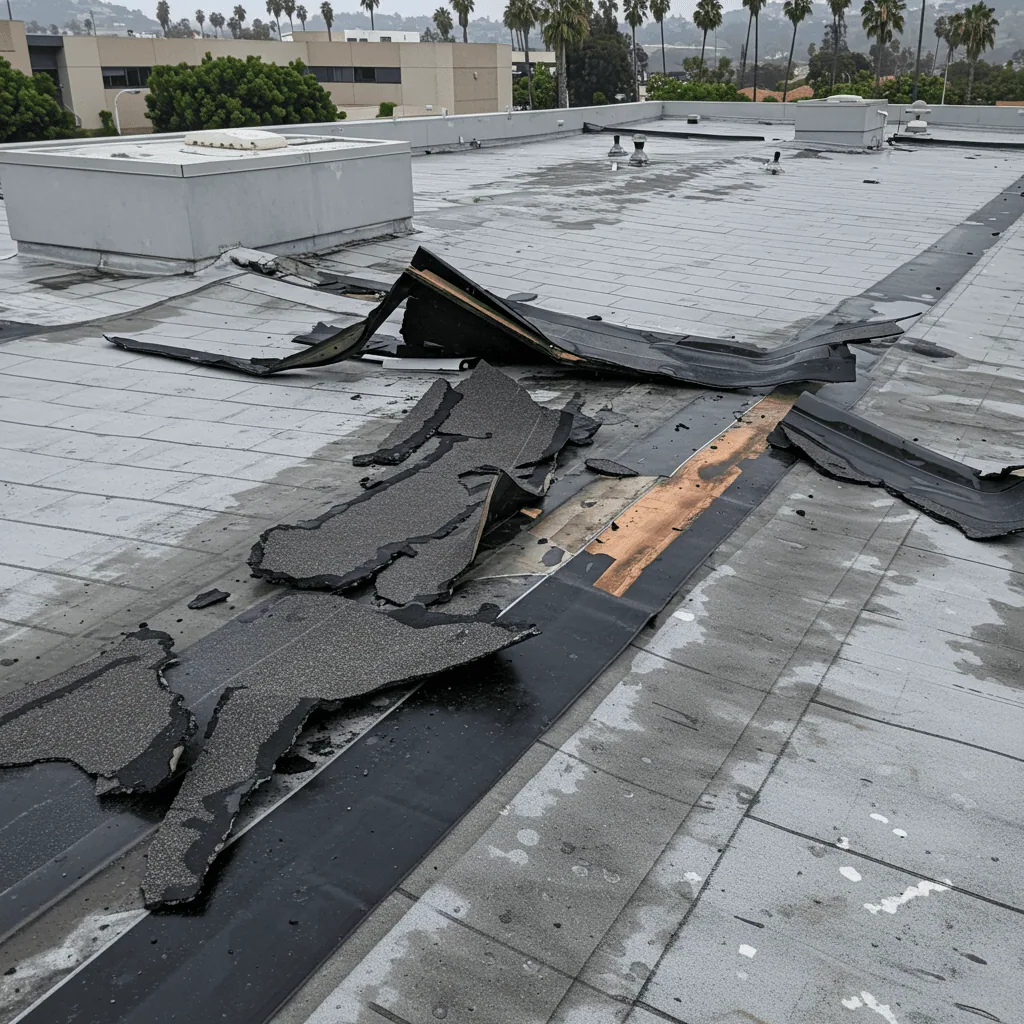 Inspect a Ponding Roof Area Request a roof assessment or call 555-555-5555. 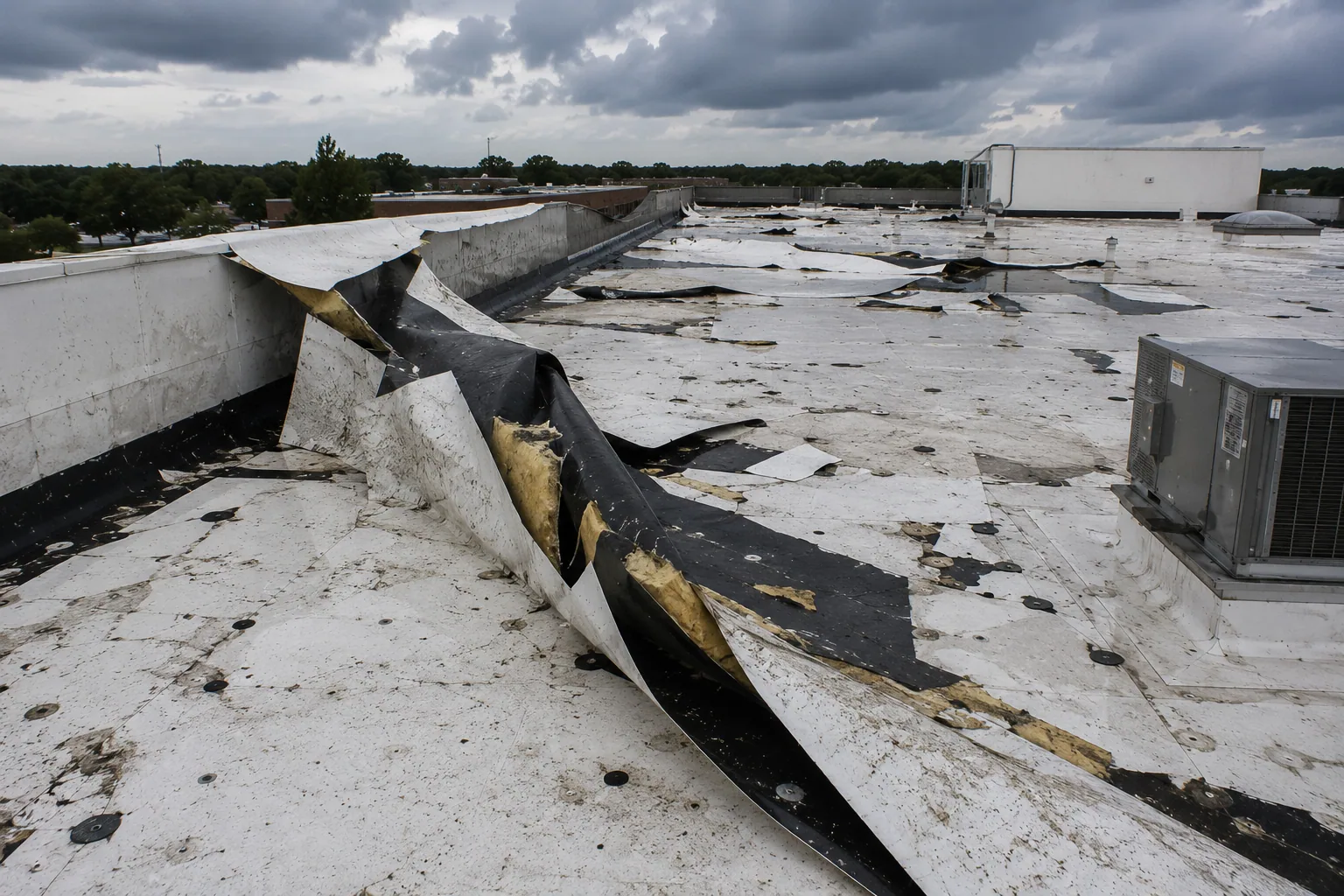 |
Separate a Blockage From a Low Roof
Clearing a blocked drain restores flow only when debris is the restriction and the outlet is otherwise intact. We inspect the drain bowl, strainer, flashing, leader connection and the water path to the outlet where accessible. A damaged bowl or open flashing needs a repair at that detail. If the water remains in a depression after the route is clear, the surface elevation or deck may be contributing. We state which condition is visible and which would need further investigation.
A flashing repair may address water entry at an outlet or curb, while a seam repair can correct an open lap near a ponded area. If moisture is suspected below the membrane, a survey may help identify areas for confirmation. Survey results have limits and may require test cuts to verify wet insulation before removal is scoped.
Local repair can restore a drain detail or secure loose membrane. If a low area is widespread, or if repeated ponding has weakened the system, the owner may need to compare localized work with a broader roof correction. A recover evaluation checks whether the existing assembly is suitable to remain, and a replacement scope addresses larger system needs. We tie each path to observed conditions and open questions.
Limit Exposure While the Area Dries
When water is actively entering, we assess whether the affected area can be protected and what must be addressed before permanent repair. A wet membrane surface may not be ready for adhesive or other materials that require dry conditions. We identify safe access, interior protection and the portion of roof that can be closed during the visit. Temporary work is recorded with its location and remaining limitations.
For occupied offices or retail properties, the facility contact can help protect furnishings, inventory and electrical equipment below the reported leak. At a downtown property, the route to a drain or roof hatch may pass a tenant-controlled area. At an industrial site, equipment and operations can limit where materials are staged. We coordinate those details with the person responsible for the building before performing the repair.
Emergency response is available at any hour when a roof failure needs assessment, including nights, weekends and holidays. Weather and roof safety still determine whether a crew can perform temporary work. If the surface must dry before a permanent correction, we state that next step and the expected follow-up conditions rather than leaving a temporary patch without a record.
Restore the Drainage Detail
Once the cause is established, a repair can clear a restriction, correct damaged flashing or restore a membrane connection around the outlet. A slope correction is a different scope and may require review of the assembly and supporting structure. We identify the work boundary, materials and any demolition needed to reach a sound substrate. If opening the roof reveals wet insulation or a damaged deck, we photograph the condition and discuss the added work with the owner before proceeding.
Cost and timing depend on roof access, outlet design, membrane compatibility, depth of wet materials and whether slope or deck work is required. A small drain repair can be limited; a broad low area may need additional design or investigation. The scope keeps the observed issue separate from optional testing and longer-term capital work. The building contact can then decide which action is authorized.
During repair, we maintain a clear drainage route and protect exposed material as the work proceeds. Each open area is closed or secured before the crew leaves. Rain can change the work order, especially when the surface needs drying for a permanent bond. We coordinate any change in sequence with the facility representative and record the condition at closeout.
Track the Area After the Repair
The closeout record identifies the drain or roof section, observed water condition, repair completed, photos and any remaining limitation. If follow-up observation is needed after rainfall, the report says what to watch and where to check. The property team can compare that location with later inspection results and distinguish a clear outlet from a low area that still holds water.
A preventive roof maintenance visit can include outlet checks and visible membrane review. A roof capital plan can rank a broad slope or replacement project against immediate repairs. Send the address, reported pool location and roof access contact to arrange an inspection.
Commercial Roofing Questions
How long should water remain on a commercial roof after rain?
The inspection records when and where water remains, but the appropriate assessment depends on the roof layout and drainage design. We check whether the outlet is clear, whether the area has a low point and whether water is entering the building.
Will clearing the drain fix ponding?
It will restore flow when debris is the restriction and the drain assembly is intact. If water remains in a depression after the route is open, slope or deck conditions may need separate review.
Can ponding at a low-slope roof lead to interior water entry?
Standing water can keep seams, flashing and other details wet for longer periods. We inspect the surrounding assembly for visible defects and identify any concealed moisture question that needs testing.
Does a roof replacement always solve a low area?
A replacement scope must address the cause of the low area. Installing a new membrane without correcting slope or drainage may leave the same water pattern, so we define what the inspection supports before work is priced.
Inspect a Ponding Roof Area Share the Vancouver address, location of standing water, roof access contact and any leak history. We will inspect the drainage route and explain repair or follow-up options. Request a roof assessment or call 555-555-5555.