Commercial Roof Drains and Scuppers in Vancouver, WA
Repair commercial roof drains and scuppers in Vancouver, clear blocked outlets and correct drainage details that contribute to ponding or interior leaks. Water held beside a clogged roof drain puts pressure on nearby seams and flashing. We inspect commercial drains, scuppers, overflows and drainage routes in Vancouver, WA, then determine whether the issue is debris, a damaged outlet or a low roof area. Vancouver's wet cool season brings repeated rain, so an outlet needs to carry water off the roof without leaving an unintended pool. The Port of Camas-Washougal industrial park contains manufacturing and distribution buildings, where each structure needs its own outlet map and access plan. We check the drain bowl, strainer, clamping ring, surrounding membrane and visible piping connection. A ponding water assessment can distinguish a blocked outlet from a low area or slope concern. If the drain transition is damaged, a roof repair can restore the membrane detail around it. We note what is clear, what is damaged and what needs a broader drainage correction. Trace the Drainage RouteWater should move across the roof toward a drain or scupper without crossing an exposed lap or entering a wall transition. We follow the visible route from high areas to each outlet. We look for leaves, packaging, loose fasteners and other debris that can collect at a strainer. We check whether the drain bowl is secure, the membrane is clamped correctly and the outlet remains open. A clean strainer matters, but the transition and connection around it also need to remain sound. Scuppers pass water through a parapet, so height and flashing condition affect drainage. We look for debris at the opening, split membrane at the corners, deteriorated metal and signs that water has backed up. An overflow scupper should remain clear and located to relieve water if the primary drain is restricted. We note if the overflow is blocked, too high relative to the roof surface or disconnected from a safe discharge path. The repair should restore the whole route instead of opening one side of the wall. Vancouver’s wet season brings rain with winter wind, putting regular pressure on roof drainage and exposed details. Debris can move during windy weather, and repeated rain can make a slow drain visible through ponding or interior moisture. Occasional snow and freeze conditions also make open outlets important. We record observed water depth or extent only when conditions allow and avoid treating a dry-day view as proof that the roof drains correctly in a storm. A maintenance visit during or after wet weather may show a different condition. | 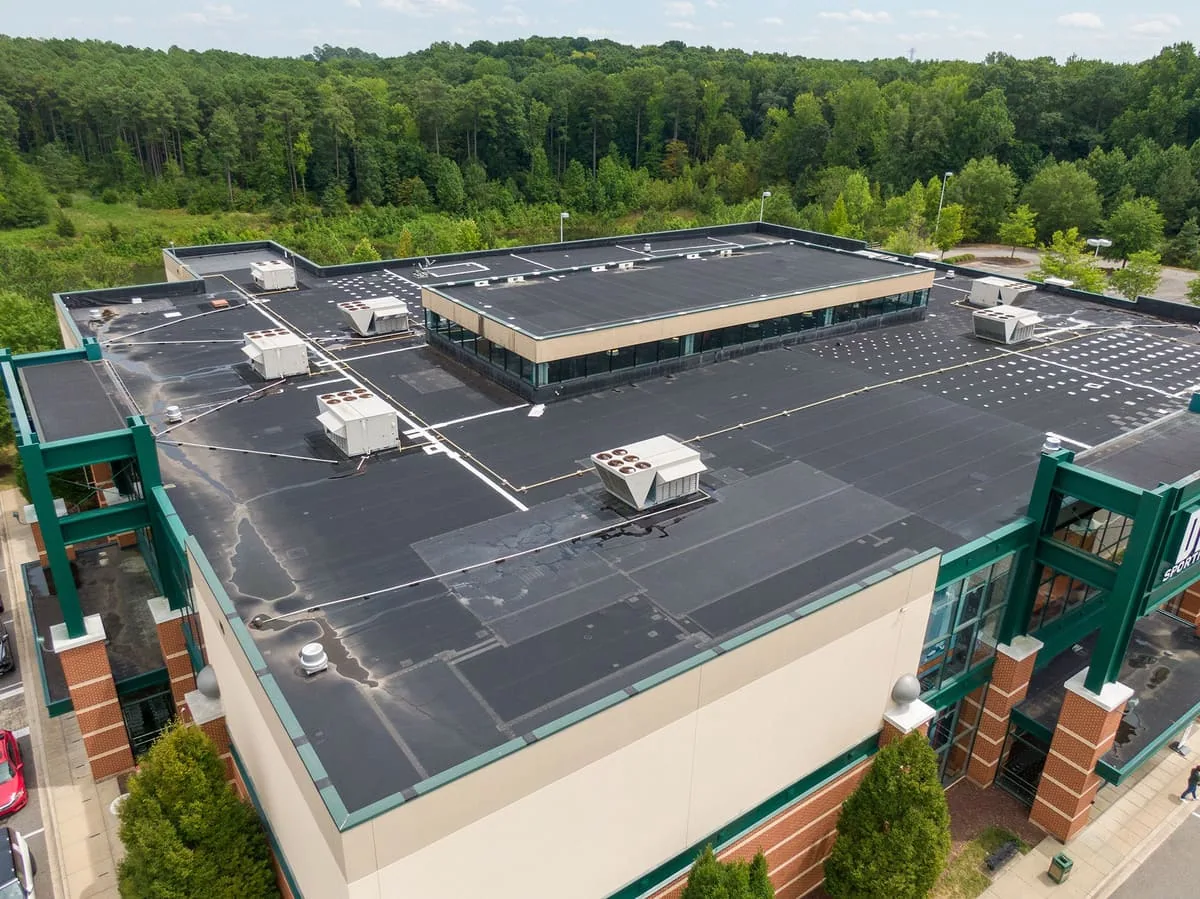 Correct Commercial Roof Drainage Request a roof assessment or call 555-555-5555.  |
Find the Cause of Ponding
A blocked strainer may be cleared without changing roof construction. A damaged drain bowl, loose clamping ring or failed membrane transition needs repair. If water remains because the outlet sits above the low point, the drain assembly or surrounding slope may need adjustment. A cricket, tapered insulation or deck correction can direct water toward the outlet, but each option depends on structure, existing layers and drain height. We identify which condition the inspection supports before describing the work.
Standing water can add weight and keep seams, patches and flashing wet for longer. It may also hide a puncture or make a leak harder to trace. A tapered insulation and cover-board assembly can create slope on a suitable project, while adding material changes elevations at walls, curbs and drain bowls. We check those transitions and overflow provisions before recommending a slope correction. Existing roof layers, structural capacity and code requirements may affect the design.
The roof system shapes the repair method at each outlet. Single-ply membranes need compatible flashing and attachment. Built-up or modified bitumen systems have different drain tie-ins. Metal roofs may route water to gutters rather than interior drains. We identify the roof type where possible and explain how the new detail will connect to it. When several areas pond or outlets repeatedly fail, a full roof inspection can map conditions beyond one drain.
Restore the Outlet Detail
Repair starts by removing debris and exposing the drain or scupper connection. We inspect the membrane, ring, bowl and visible outlet, then remove failed material until a sound surface remains. The new flashing or membrane tie-in must be compatible with the roof system and sealed to the drain assembly. We secure the strainer after work and verify that the outlet is open. Where a pipe connection is concealed or inaccessible, we identify that limit and the inspection needed to check it.
A drainage correction may include raising or replacing an outlet, adding a cricket, changing tapered insulation or correcting a low transition. Such work can affect curbs, doors, parapets and overflow height, so the proposal needs to account for nearby details. Drain and scupper work can remain a localized correction or become part of broader roof renewal; verify jurisdictional review if the planned scope changes the assembly. We identify code and permit questions that need review when the scope changes roof elevations or drainage design.
Gutter and downspout connections can also control where water leaves an edge. For perimeter systems, a gutter and edge detail review can find a damaged outlet or overflow path. We state whether the work clears a blockage, repairs a transition or changes roof slope. Those are different scopes with different material, access and scheduling needs. Temporary protection is available for an active leak while a permanent outlet repair is prepared.
Keep Outlets Clear
After repair, we record the outlet location, materials used, nearby roof condition and any remaining drainage concern. Photographs show the drain or scupper before and after work. The facility contact can use that record to add the outlet to a cleaning route and to check the overflow path during future maintenance. If the correction changed a low area or roof edge, the updated roof map should show the new route.
Regular clearing matters at industrial properties where windblown packaging, leaves or service debris can reach the roof. The Port of Camas-Washougal industrial park is about ten minutes from I-205, and its reported mix of businesses includes active production and distribution uses. We coordinate roof access and staging around each building's operations. A scheduled maintenance visit can check drains and scuppers before the wet season. For a property at the Port of Camas-Washougal industrial park, each outlet should remain tied to the building and roof section it serves.
Commercial Roofing Questions
Why does water remain around a roof drain after the strainer is cleaned?
The outlet may sit above the lowest roof area, the drain bowl may be damaged, or insulation and deck slope may direct water away from it. We check the drain assembly and surrounding surface to separate debris from elevation or slope issues. A cleaning visit can clear the strainer, while a low area may need a separate design correction.
Do you repair the roof membrane around a leaking drain?
We inspect the membrane connection, clamping ring, bowl and nearby surface. If the transition has failed, we remove loose material and install a compatible repair that ties into a sound area. If the outlet itself or concealed piping is damaged, the scope identifies that additional work and any access needed to confirm it.
What is the difference between a drain and an overflow scupper?
A roof drain directs water into an interior outlet, while a scupper passes water through a parapet to an exterior discharge. An overflow provides a separate path when primary drainage is restricted. We check that each route is open, flashed and positioned to perform its intended role.
Can you correct ponding without replacing the whole roof?
A limited drainage problem may be corrected by clearing or repairing the outlet, or by adjusting slope in a suitable area. The choice depends on roof layers, structural conditions, drain height and surrounding transitions. We inspect those details and explain whether localized work is feasible or a broader reroof scope deserves review.
Correct Commercial Roof Drainage Send the Vancouver property address, building use, affected drain or scupper location and when water remains on the roof. We will trace the outlet route and identify cleaning, repair or slope-correction needs. Request a roof assessment or call 555-555-5555.