
Commercial Roof Snow and Ice Damage Repair in Vancouver, WA
Inspect snow and ice damage on commercial roofs in Vancouver, WA. We review drainage, flashing and affected areas before defining repair or protection. A freeze at a blocked roof outlet can leave ice beside the drain after nearby areas begin to clear. We inspect commercial roof snow and ice damage in Vancouver, WA, checking the outlet, membrane, flashing and reported interior water path. Vancouver shares a maritime pattern with occasional snow and freeze events, not persistent snow loading. A roof still needs clear drainage and sound transitions when winter weather arrives. At the Vancouver VA Campus, patient care, imaging, maintenance, logistics and administrative functions occupy multiple buildings. At the Port of Vancouver Industrial Waterfront, warehouse and shipping activity can affect access to working properties. Each site requires its own inspection boundary. A commercial roof inspection records accessible conditions and identifies any area that needs safe follow-up. Keep People Clear of Ice and Interior WaterBefore approaching an icy roof, we assess access and surface safety. Ice near a hatch, ladder or roof edge can make a walk unsafe. The inspection may need to wait until the surface can be reached safely, and the property contact should keep occupants away from affected interior areas or falling ice zones. We do not recommend improvised roof access by building staff. Inside, a leak report should include the room, date, water volume if known and any temporary protection already used. We coordinate with facility staff before entering patient-care, warehouse or office spaces. A ceiling stain can appear after the roof surface has thawed because water can remain in insulation or travel along the deck. We compare the reported area with roof details once access permits and state what remains unknown. Vancouver's wet cool season brings winter rain as well as occasional snow and freezing temperatures. Ice can form where water is slow to drain, and thawing can expose a weak flashing or seam. We record weather conditions around the visit and distinguish visible ice from an underlying drainage or membrane concern. The climate context does not tell us whether a particular roof carried excess load or where water entered. Where the roof is near the Port of Vancouver's active industrial properties, the site contact may need to coordinate equipment movement, delivery routes and roof entry. Downtown or healthcare buildings may have different public or patient access constraints. We confirm the building, route and responsible contact before inspection or repair. |  Inspect Winter Roof Damage Request a roof assessment or call 555-555-5555. 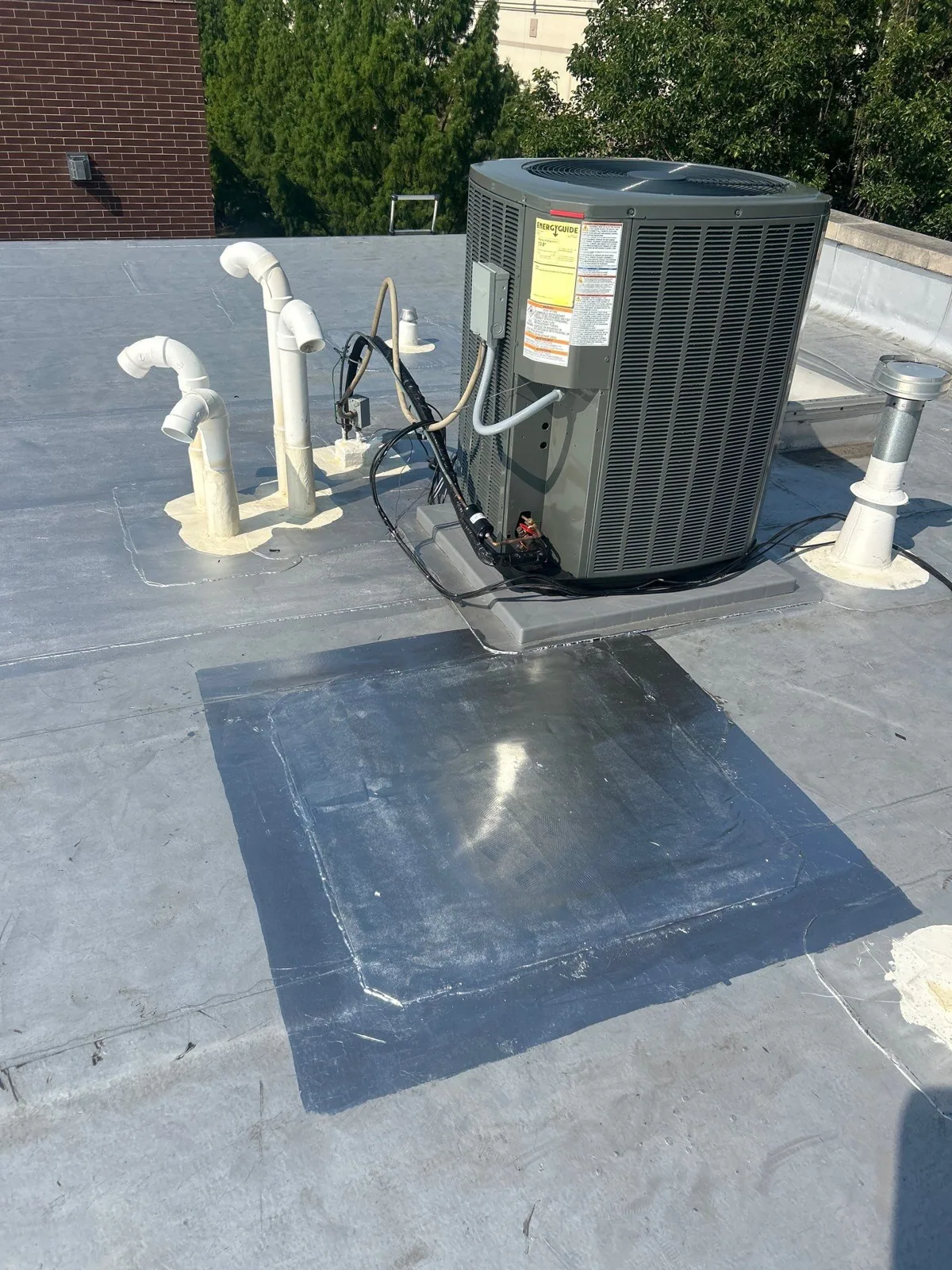 |
Review Outlets, Edges and Transitions
We check drains, scuppers, gutters and drainage routes for ice blockage, debris and damage. An outlet that is clear after thawing may still have been restricted during the event. We look for water marks, membrane separation, open laps, lifted flashing and signs that water crossed a roof transition. If a low spot remains after the surface clears, we document whether slope, a damaged drain or another condition may be involved.
Snow and ice can affect different roof components. A roof edge may have loose metal or flashing, a penetration may have an open seal, and a membrane can have a split or puncture. A ponding-water review checks a persistent low area, while a flashing inspection focuses on a transition or outlet. We identify which condition is visible and whether the roof needs moisture testing before a repair boundary is set.
At the Vancouver VA Campus, separate patient-care and support buildings require clear records by roof area. Each inspection should identify the actual building and access limits. A warehouse roof inspection similarly needs to tie any water report to the correct aisle or roof section. Building use guides coordination but does not determine roof construction.
If prior repair notes or photographs exist, we compare the locations with current observations. We record whether a defect appears fresh, older or unclear based on visible evidence. We do not use a weather report alone to assign cause. An opening or moisture scan may be appropriate if water remains concealed below the surface.
After snow or ice clears, the inspection still needs to distinguish an impact mark from an open seam, blocked drain or wet insulation. We check where meltwater could collect, inspect edge metal and flashing, and photograph any displacement that is visible. A repair made on a wet or icy surface may not bond or weld as intended, so the safe method and timing can change with conditions. The report identifies immediate protection, a return visit or testing as separate actions.
Choose a Safe Winter Repair Method
Ice must be removed only when it can be done safely and without damaging the roof. We assess whether the drain or flashing can be cleared or repaired after the surface is accessible. A damaged membrane may need a compatible patch, and a drain assembly may require repair beyond clearing ice. We document the immediate correction separately from any broader slope or system work.
Cold and moisture can affect adhesives, coatings and welded details. A permanent repair may need to wait until the substrate is dry and within the material's application conditions. Temporary protection can reduce water entry in a defined area, but its limits and follow-up requirements should be clear. Around-the-clock emergency response is available for urgent roof failures, subject to safe access and suitable weather conditions.
A drain and scupper repair can address a damaged outlet or flashing connection. If ice exposure accompanies a torn roof surface, the puncture needs its own compatible repair. Where multiple areas show failure, a commercial roof repair scope can define the affected sections. Cost and timing depend on access, roof height, system, weather, material availability and any wet insulation or deck damage.
Plan the Follow-Up After Thaw
Once the roof can be accessed, a follow-up inspection can check whether the outlet is clear and whether water left damage behind. The report can identify roof areas that were not visible during ice conditions and schedule them for a safe follow-up visit.
After a freeze, the safest repair date may differ from the date a leak was first reported. We protect the interior, photograph visible roof conditions when access is safe, then return to inspect material that could not be evaluated while ice remained. A blocked outlet, damaged edge and wet insulation should be recorded as separate findings. That sequence gives the owner an immediate action without overstating what was confirmed during a weather-limited visit.
Commercial Roofing Questions
Does Vancouver need roof snow-load repair every winter?
No. The local climate includes occasional snow and freezing conditions rather than persistent snow loading. We assess the actual roof condition and any reported event instead of applying a seasonal assumption.
Can ice near a drain cause a leak?
Ice can restrict drainage and keep water near seams or flashing. We inspect the outlet, nearby membrane and reported interior path after roof access is safe.
Should we remove snow or ice from the roof ourselves?
Do not access an icy roof without a safe plan. Roof surfaces, edges and ladders can be hazardous, and improper tools can damage the membrane. Contact the facility representative to coordinate a professional assessment.
Can you repair the roof while the surface is frozen?
Some urgent temporary protection may be possible, but permanent materials may require a dry surface and suitable application conditions. We explain the safe interim step and when a lasting repair can be installed.
Inspect Winter Roof Damage Share the Vancouver address, building use, affected area, interior leak location and access contact. We will confirm safe access and document the drain, flashing and membrane conditions. Request a roof assessment or call 555-555-5555.